 укр
укр  eng
eng 

Ukrainian higher education today is not only about survival, but also about rethinking the role of the university in conditions of prolonged crisis. Within the framework of the international project “Pedagogy in the State of Emergency”, Sumy State University, together with its strategic partner – Jyväskylä University of Applied Sciences (JAMK) – is developing innovative pedagogical approaches that can be scaled up and applied by universities in different countries operating under emergency conditions.
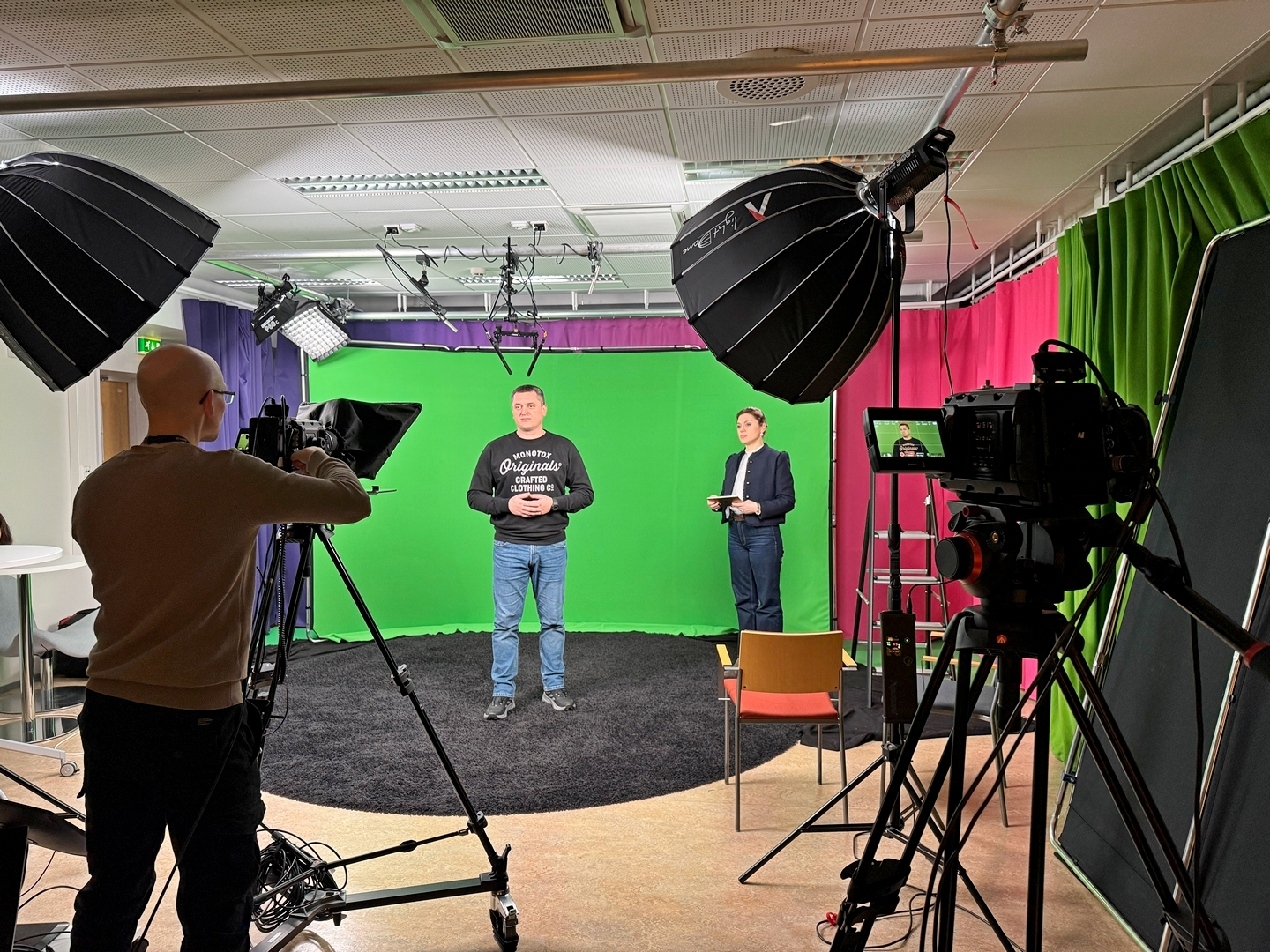
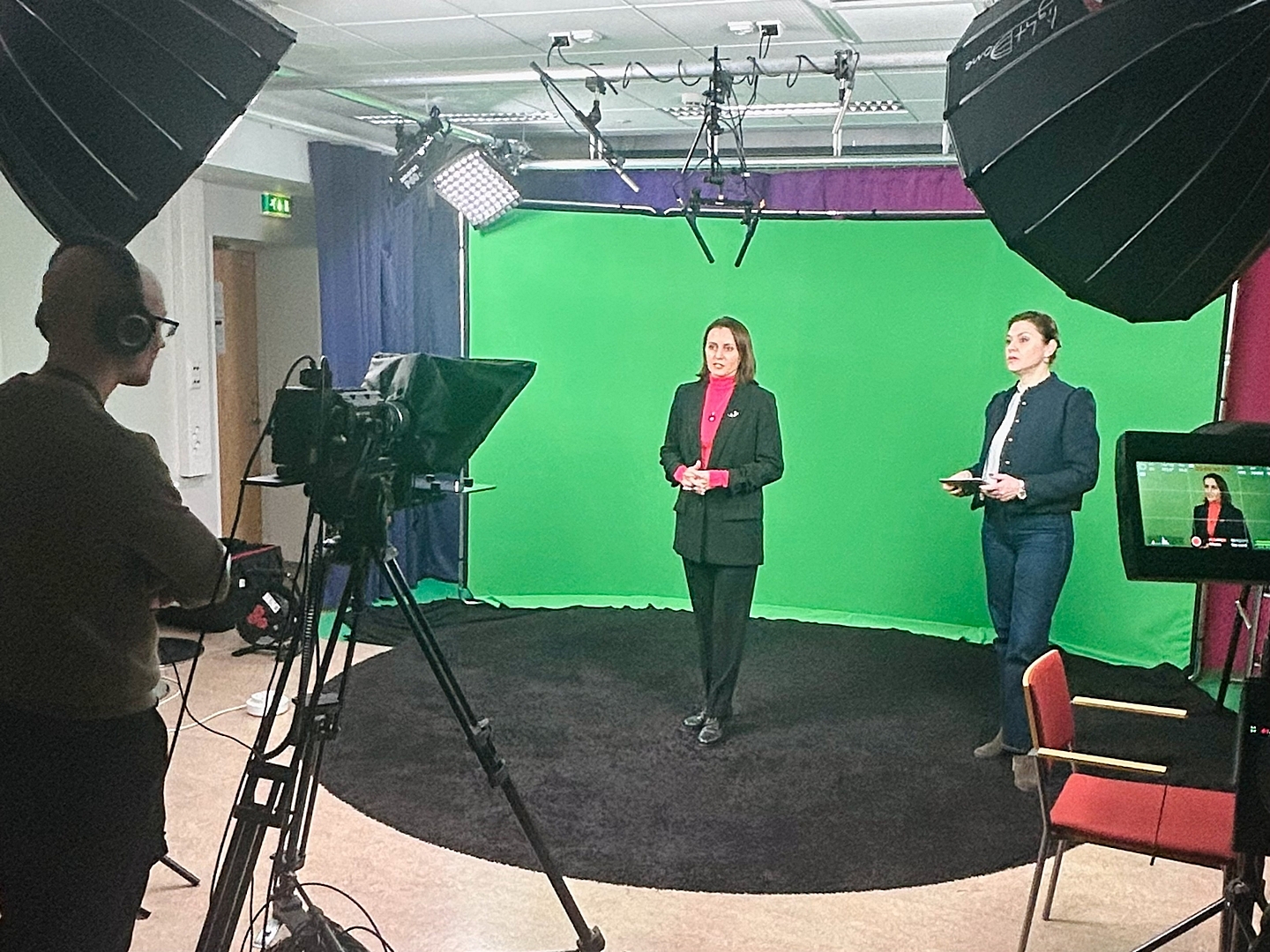
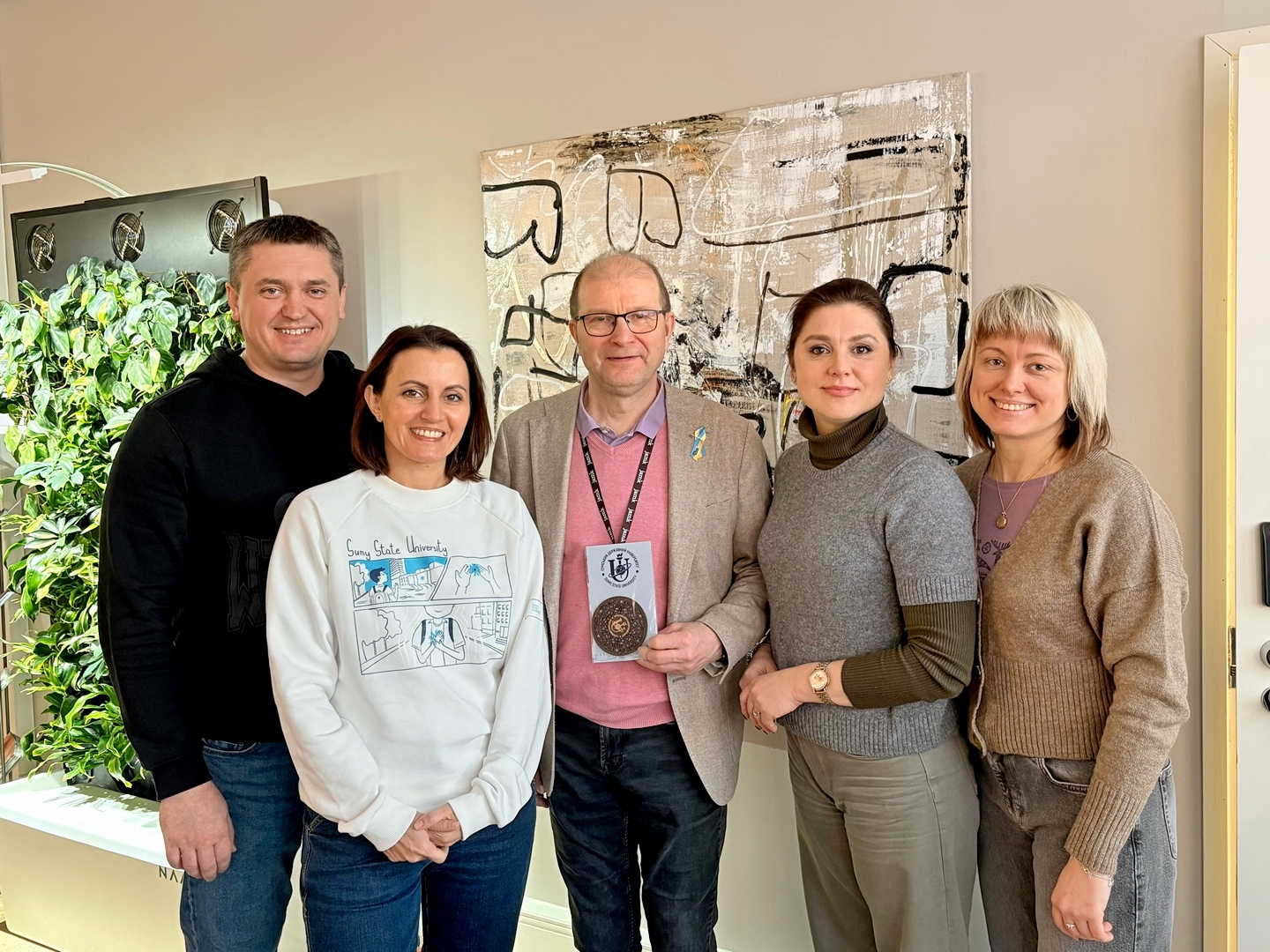
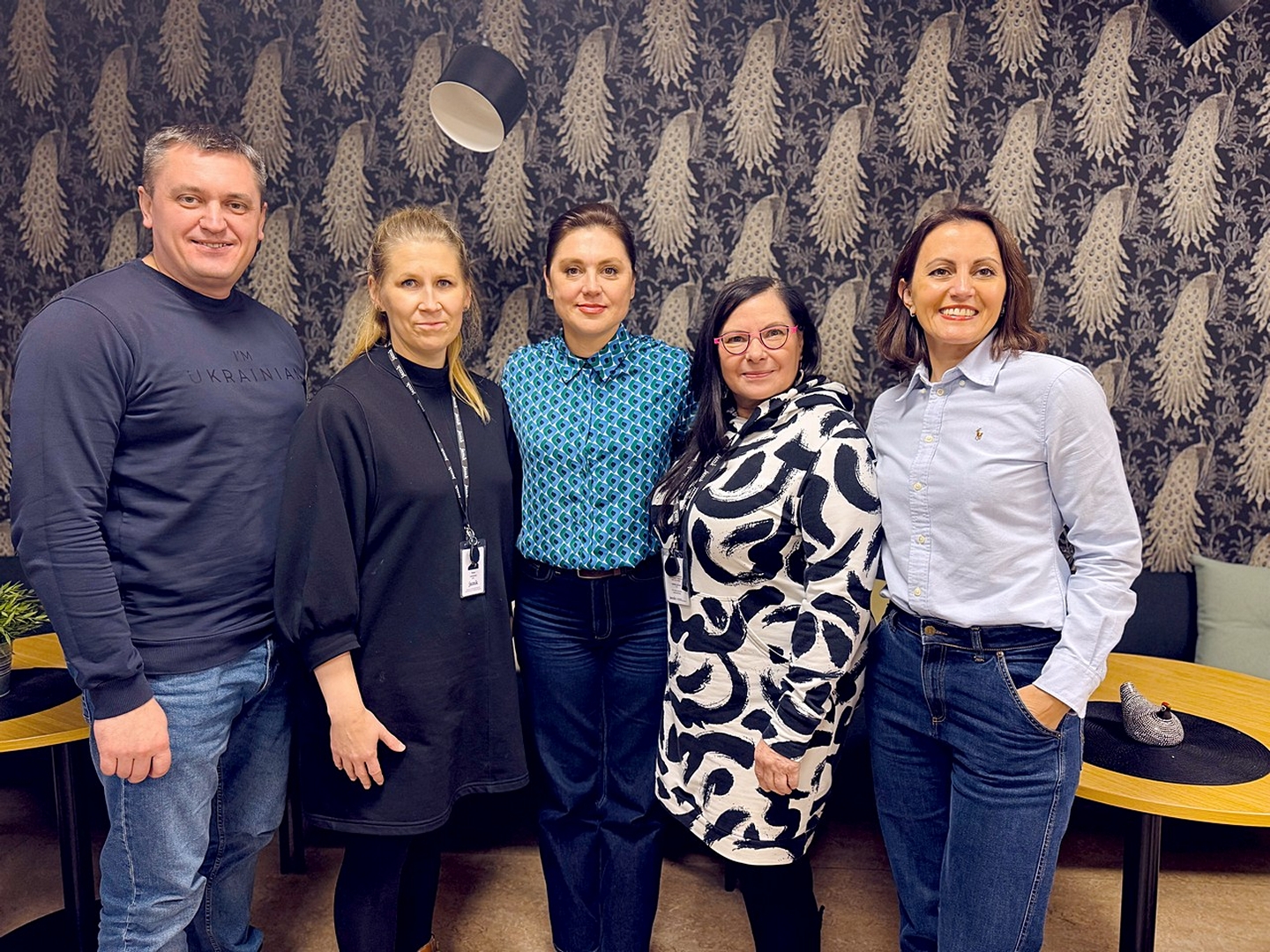
The project is funded by the Finnish National Agency for Education under the Team Finland Knowledge (TFK) programme and is coordinated by Jyväskylä University of Applied Sciences. The working visit of the Sumy State University project team to their Finnish partners in December 2025 (8–12 December) became a logical continuation of the joint work initiated during the first in-person meeting of the partners in May, and confirmed the sustainability and consistency of the development of this international partnership.
About the idea of the project “Pedagogy in the State of Emergency”, also referred to as “Emergency Pedagogy”, its uniqueness and international dimension – in our conversation with the members of the Sumy State University project team: Alla Krasulia, PhD in Pedagogy, Associate Professor, Head of the International Relations Office; Tetyana Mayboroda, PhD in Economics, Associate Professor, Deputy Head of the International Relations Office; Oksana Zamora, PhD in Economics, Associate Professor of the Department of International Economic Relations; and Dmytro Tsyhaniuk, PhD in Economics, Associate Professor, Director of the Department for Staff Development and Training of Academic and Research Personnel.
Why has the need for a systematic understanding of “emergency pedagogy” emerged precisely now, and how did the idea of this project originate?
Alla KRASULIA:
“Pedagogy has evolved for centuries under conditions of relative stability. Today, however, history has placed education in a state of permanent emergency. This is where an important play on meanings emerges: ‘pedagogy in a state of emergency’ as a response to crisis, and ‘emergency pedagogy’ as a new quality of pedagogical thinking.
For us, this is not only about the survival of education during the war. It is about shaping a pedagogy capable of operating amid uncertainty, trauma, and limited resources, while preserving humanistic values. This experience is what makes Ukrainian education unique and valuable for the international academic community today.”
Tetyana MAYBORODA:
“The idea of the project emerged from the realization that temporary solutions no longer work. Ukrainian education has been living in a state of crisis for several years – from the COVID-19 pandemic to russia’s full-scale war against Ukraine. We understood that a systematic rethinking of this new experience was needed: how to teach when students and teachers live under constant stress, and how to maintain quality and trust within the educational process.”
Oksana ZAMORA:
“The project became a response to the real needs of the university community. We observed changes in student behaviour and transformations in their learning experience. That is why it was important not merely to create a course, but to rely on data, research, and the authentic voices of students. Even during our first visit to Jyväskylä, which coincided with the mobility of our students, we first conducted a focus group with them and then carried out a large-scale survey through their personal online accounts in order to collect first-hand feedback.”
Dmytro TSYHANIUK:
“From a staff development perspective, it was evident that academic staff found themselves under dual pressure – professional and emotional. ‘Pedagogy in a state of emergency’ is about how not to burn yourself out and how not to let your students burn out. ‘Emergency pedagogy’, however, is about how to continue growing under these conditions by developing new competencies that will be needed not only in Ukraine, but beyond its borders as well.”
What makes the “Pedagogy in the State of Emergency” project unique, and why can its experience be useful for other countries?
Oksana ZAMORA:
“The uniqueness of the project lies in the combination of empirical data and pedagogical solutions, as well as in the complementary Ukrainian and Finnish expertise and experience. We surveyed more than 1,200 students at Sumy State University to understand how they study during wartime, what supports them, and what obstacles they face. This allowed us to move from general reflections to concrete, practical solutions that can be adapted to other crisis contexts.
We also work very closely with our Finnish colleagues, jointly developing, discussing, supplementing, and reflecting on the materials and approaches they propose. We are grateful for this warm cooperation and the strong sense of shared purpose that accompanies our work.”
Dmytro TSYHANIUK:
“Our approach is based on trauma-informed pedagogy, yet it goes beyond it. Once again, the associative dimension comes into play: emergency pedagogy is not an exception, but a new norm for a world living in turbulence. We are creating a toolkit that helps educators work professionally even under emergency conditions, and this experience is scalable.”
Tetyana MAYBORODA:
“Cooperation between our universities began with a small but significant step – in 2022, our colleague from the Department of International Economic Relations, Associate Professor Tetyana Shcherbyna, was invited to a short-term contract at Jyväskylä University of Applied Sciences. She worked systematically and consistently on building inter-university links, for which we are sincerely grateful.
It is also extremely important that JAMK is our partner within the European University Alliance E³UDRES². This significantly strengthens our visibility, engagement, and integration into joint alliance initiatives. After piloting the Emergency Pedagogy course at Sumy State University, we are already seeing growing interest from partner universities within the Alliance in conducting training on this topic as part of disseminating our joint project.”
Alla KRASULIA:
“Today, Ukrainian higher education is generating knowledge that can be useful for other countries – in the context of wars, migration crises, and climate disasters. Emergency pedagogy is no longer a local phenomenon; it is becoming Ukraine’s contribution to the global educational discourse.”
INFO BOX
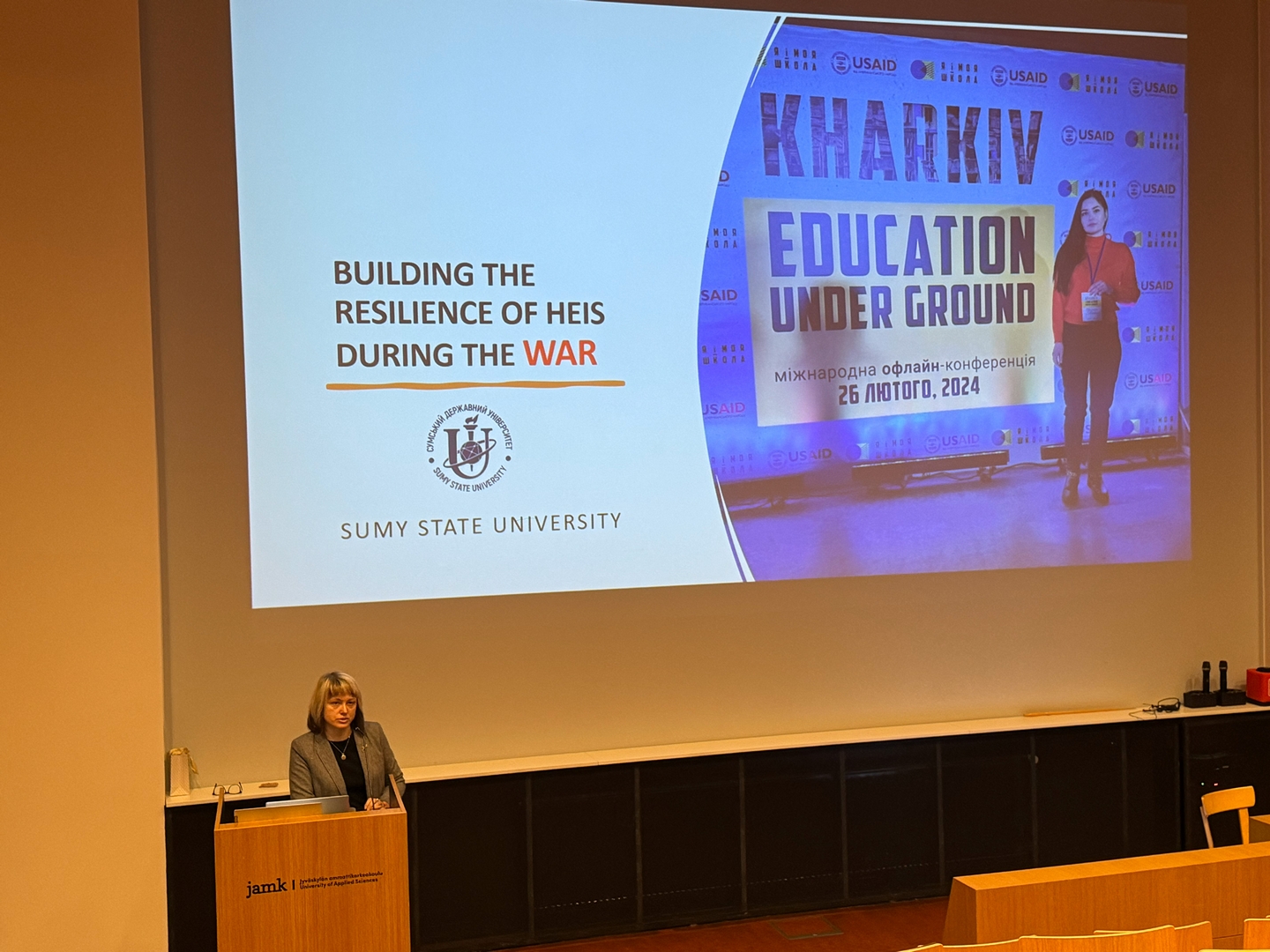
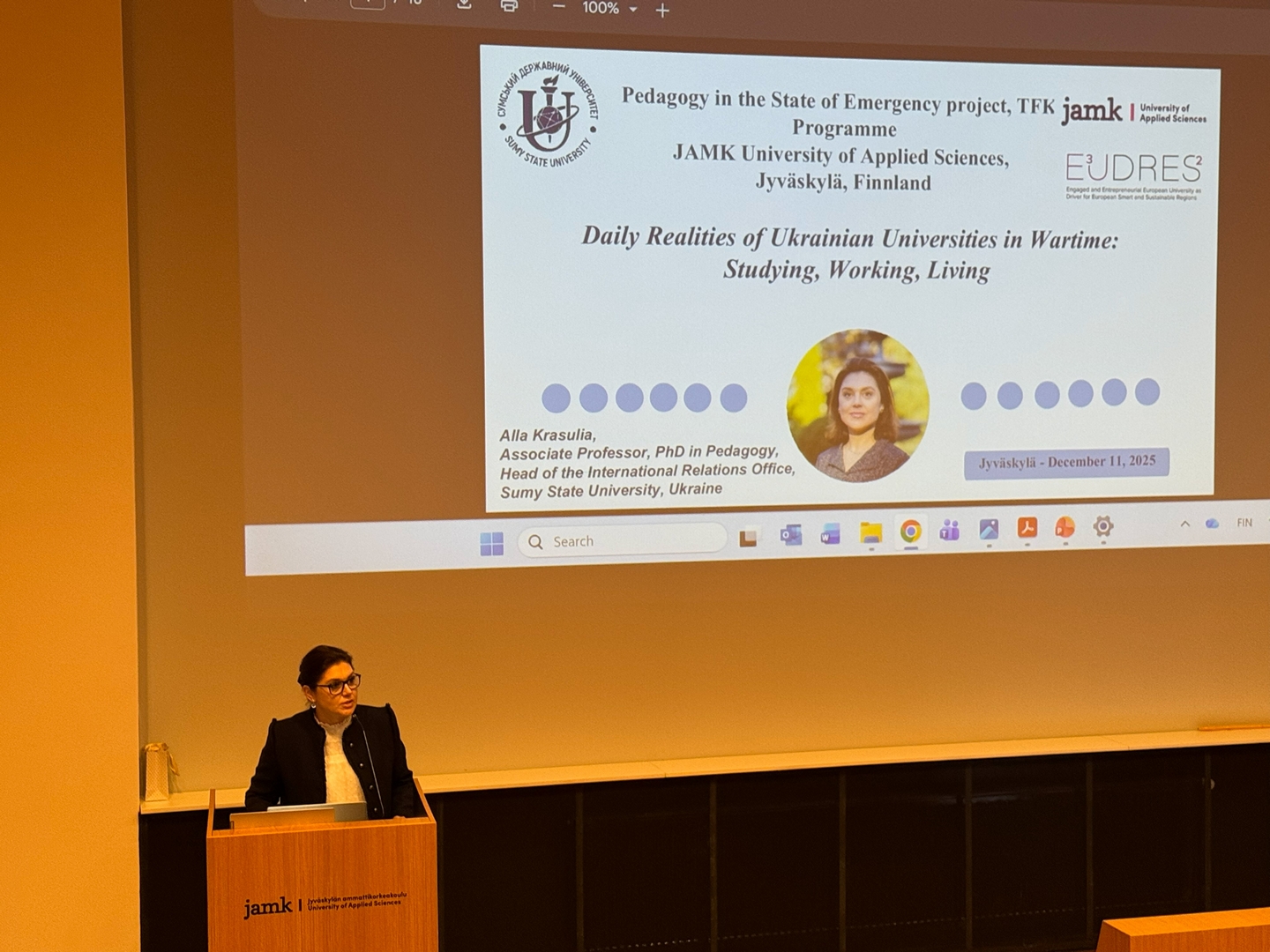
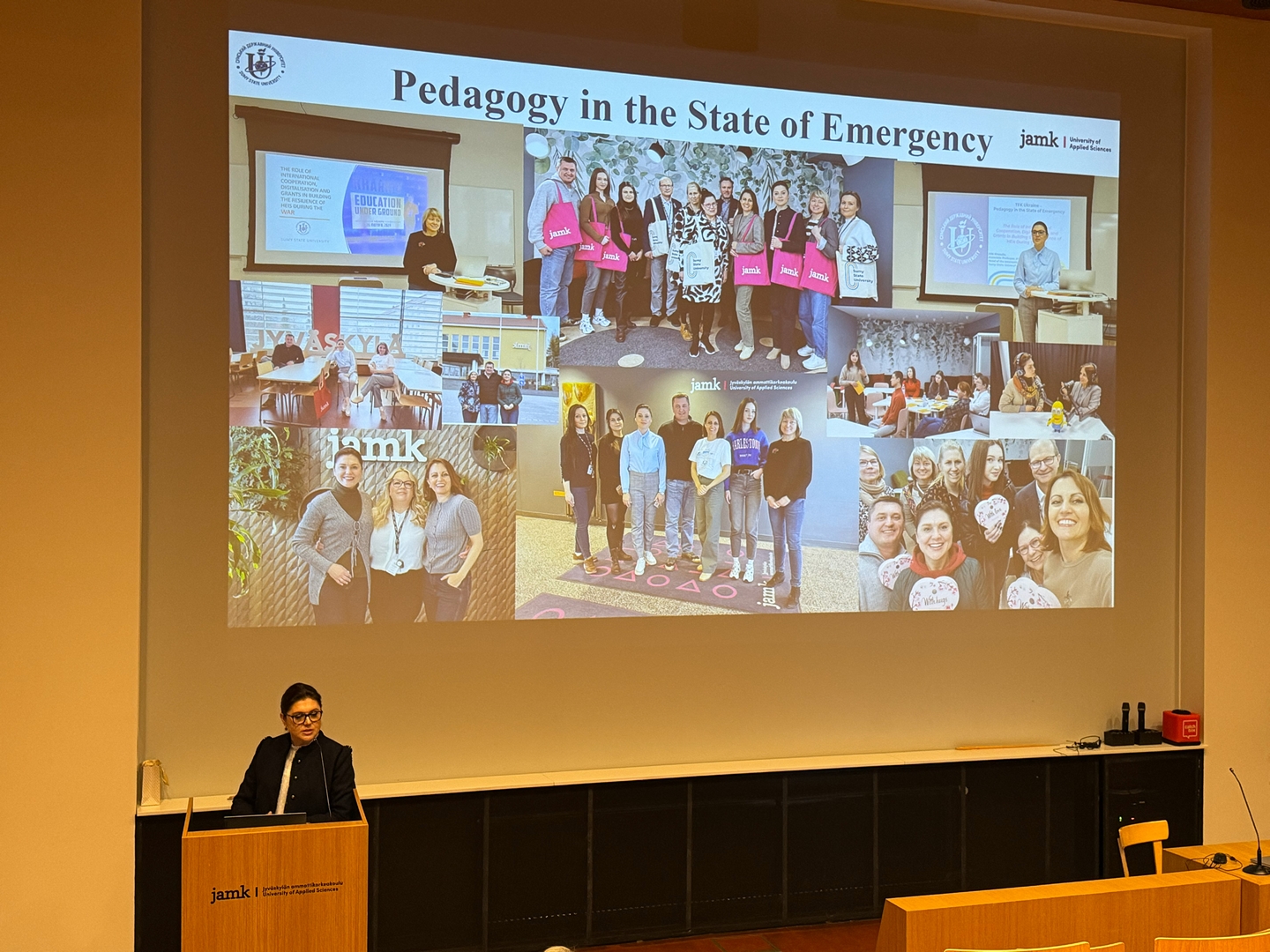
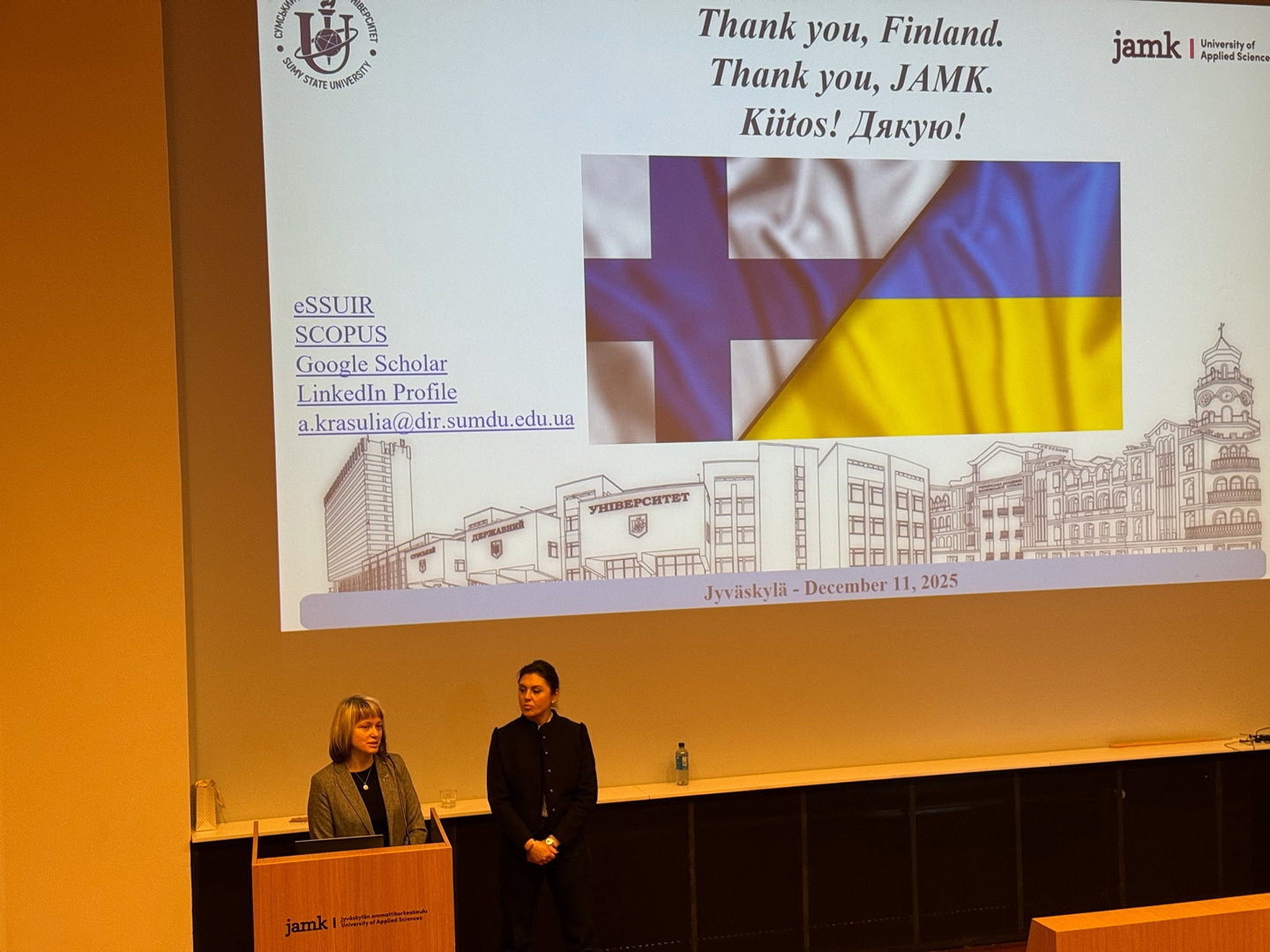
Open Lecture in Jyväskylä: Ukrainian Experience for the European Academic Community
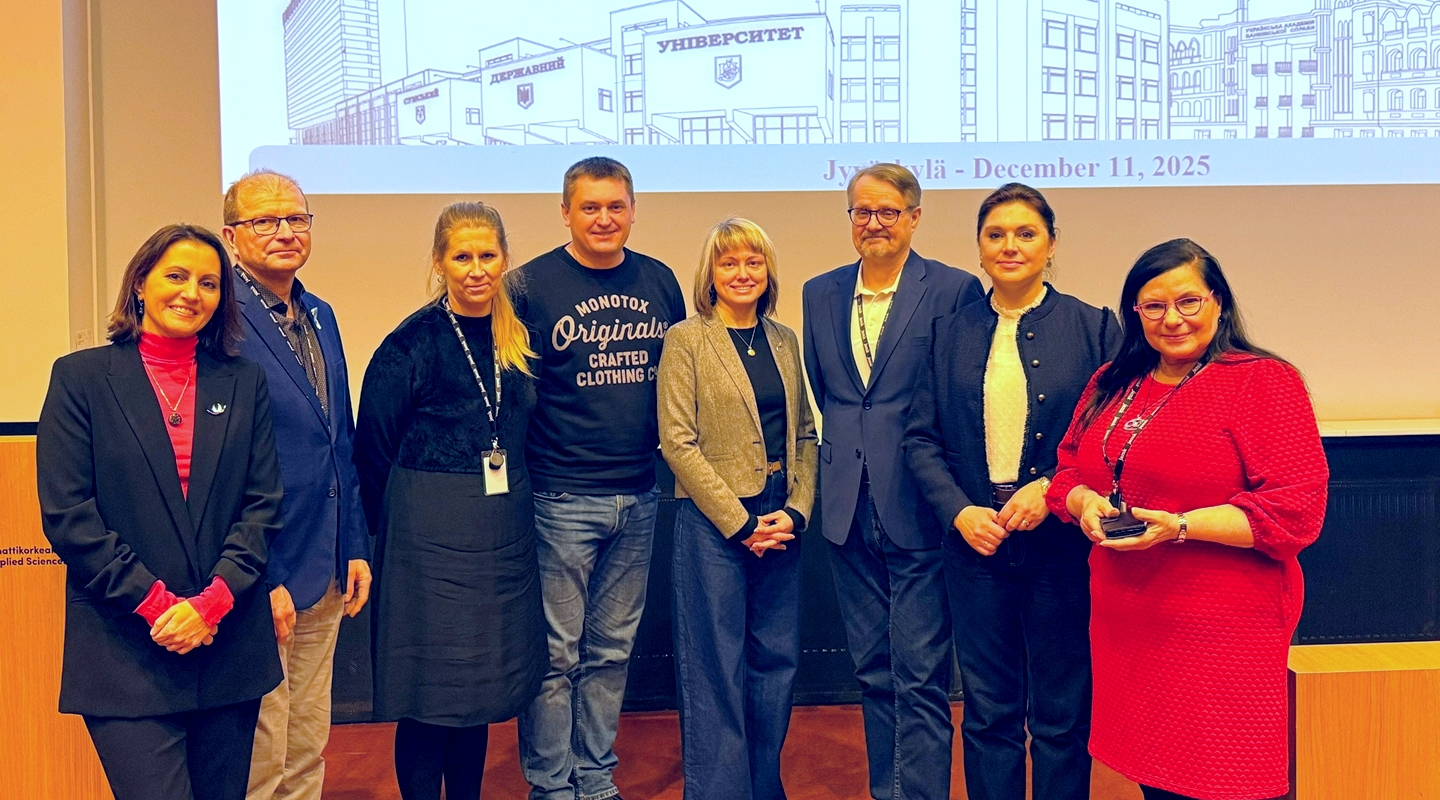
As part of the visit to Finland, Oksana Zamora and Alla Krasulia delivered an open lecture for the academic community of Jyväskylä entitled “Daily Realities of Ukrainian Universities in Wartime: Studying, Working, Living.”
Alla KRASULIA:
“I deliberately structured my presentation as a story – not as a set of facts or statistics, but as a narrative about a living organism, which our university has become today. A university that lives, breathes, and teaches just 30 kilometres from the enemy. I wanted this to be a story not only about education during war, but about a community of people who wake up every morning not asking ‘Will there be a class today?’, but ‘Will it be safe?’ – and who nevertheless continue teaching, publishing research, supporting students, and building the future.
When I looked into the audience, I saw not just interest, but genuine empathy. This was especially palpable from the leadership of Jyväskylä University of Applied Sciences (JAMK). The Rector, Vesa Saarikoski, demonstrated a deep and accurate understanding of the context of russia’s war against Ukraine – without simplifications or illusions. At that moment, I felt that our views and educational philosophies truly aligned: education is not a service or a formality, but a responsibility, a form of resistance, and a care for the future. For me, it was a quiet yet very powerful realization that the story of a Ukrainian university living next to war is being heard and understood – and that this story is not only about pain, but also about dignity, resilience, and the ability to remain human even when the world around loses its balance.”
Oksana ZAMORA:
“Finnish colleagues were interested not only in our challenges, but also in our solutions. The discussion showed that the Ukrainian experience is perceived as a source of knowledge and practices that may be useful for universities in other countries working in crisis conditions.
In general, during such talks, I aim to present our pain and experience in a balanced way and to genuinely inspire admiration for our educators and students. I have a slide with the question ‘Do people study during wars?’ because previous wars did not take place under conditions of such digitalisation – either the era was different, or countries were not as technologically advanced. Through these connections, international audiences learn that Ukraine is a digital tiger, maintaining this status even under Muscovite (Moscow-originated) bombs.”
The meeting generated strong interest among colleagues at Jyväskylä University of Applied Sciences (JAMK) and once again confirmed the importance of direct academic dialogue.
Interview conducted by Halyna Levytska.