 укр
укр  eng
eng 

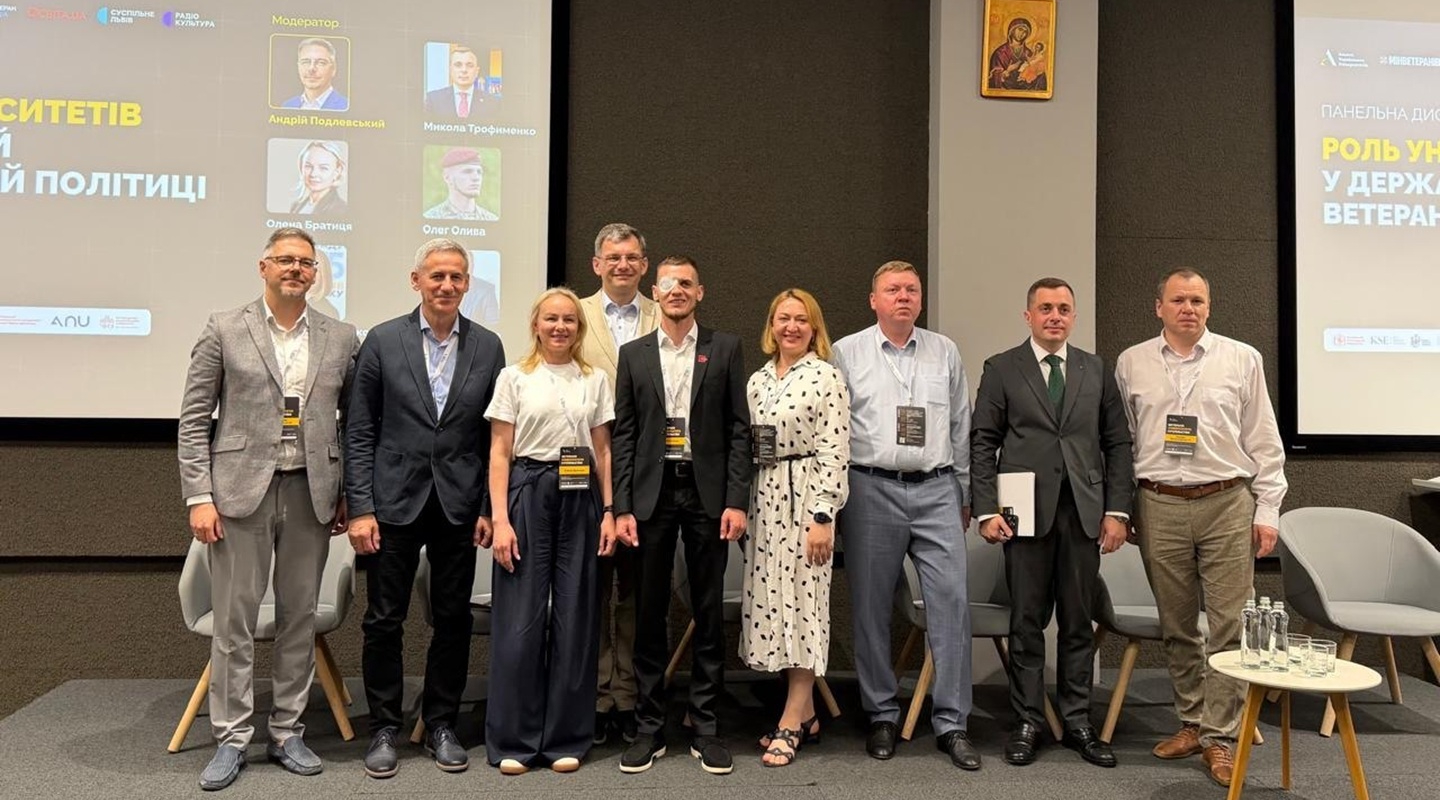
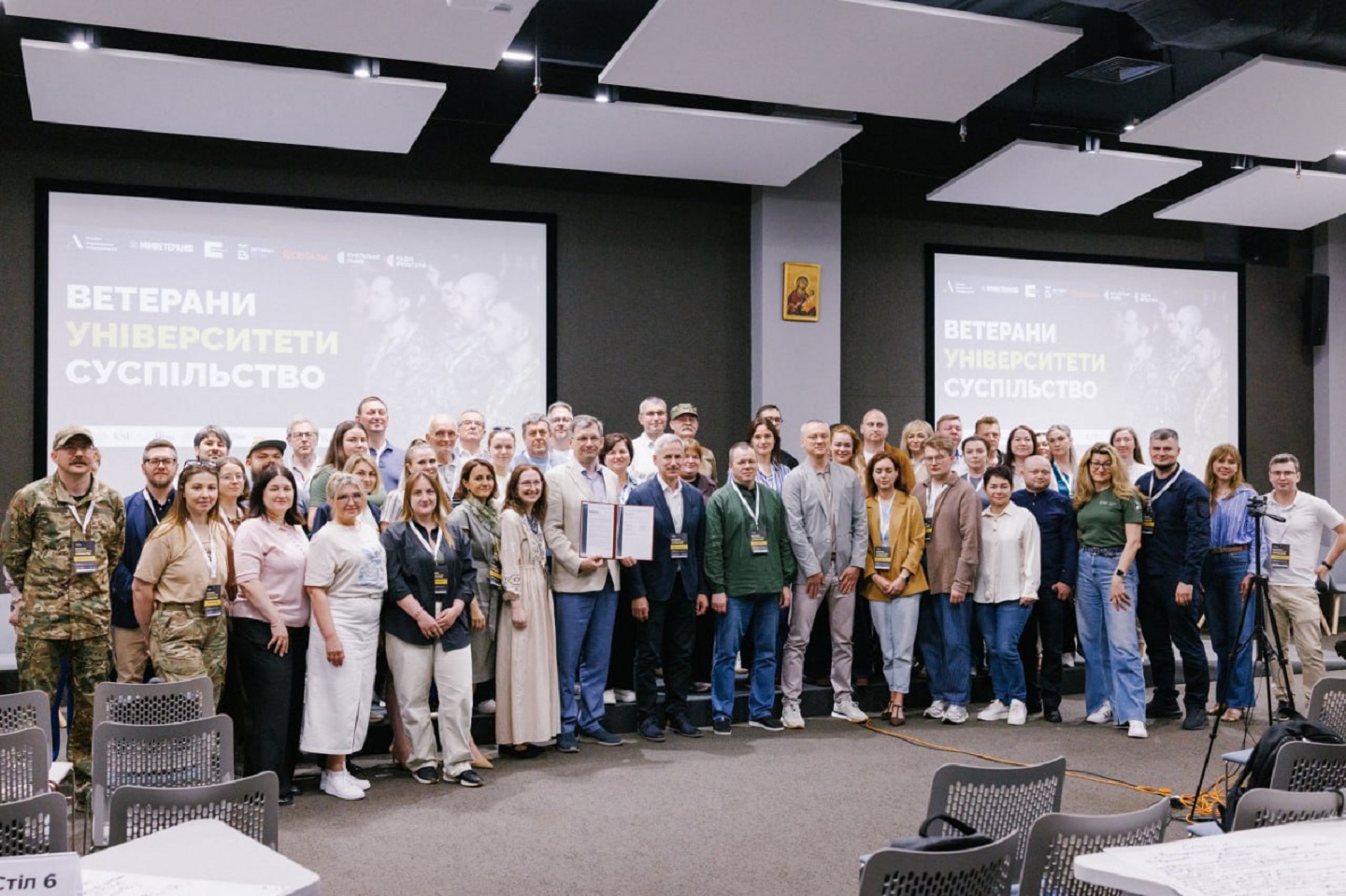
On 10-11 June 2026, the all-Ukrainian forum “Universities, Veterans, Society”, organized by the Alliance of Ukrainian Universities, took place in Lviv. The event brought together representatives of higher education institutions, government agencies, local authorities, veterans’ organizations, business community, and experts to develop practical solutions for supporting male and female veterans.
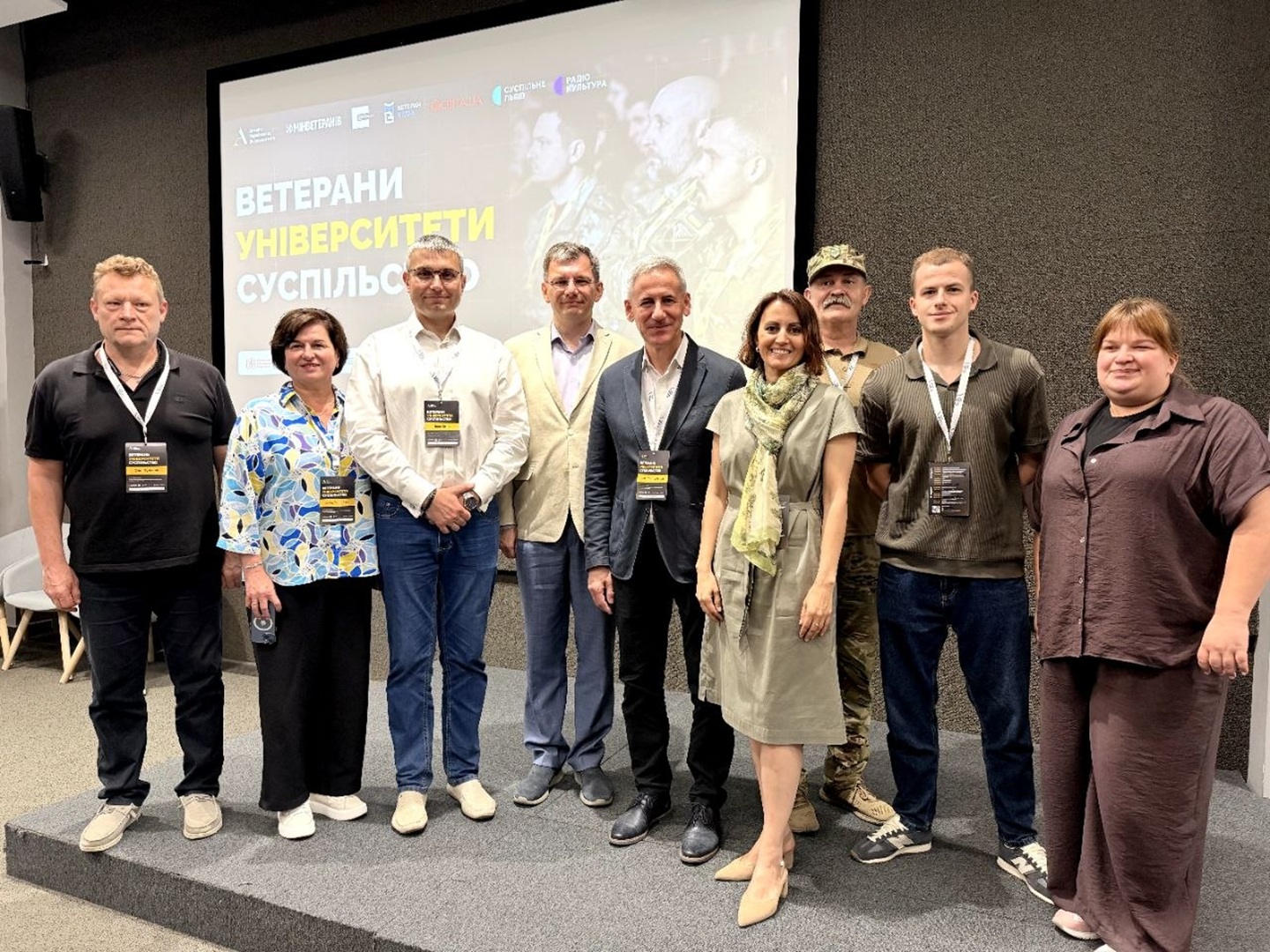
SumDU was represented at the forum by Vasyl KARPUSHA (SumDU rector), Ivan KOZII (vice rector), Tetyana MAYBORODA (deputy head of the International Cooperation Department), Andriana KOSTENKO (head of the Department of Psychology, Political Science, and Sociocultural Technologies and director of the Center for Social Research), Oleh TULIAKOV (associate professor of the Department of Psychology, Political Science, and Sociocultural Technologies and director of the Center for Veteran Development), Yevheniia KRYVOSHEIENKO (head of the Department of Extracurricular Activities), Artem KRYSKO (president of the Student Union), and Oleh KORNIENKO (veteran of the Russian-Ukrainian war and historian).
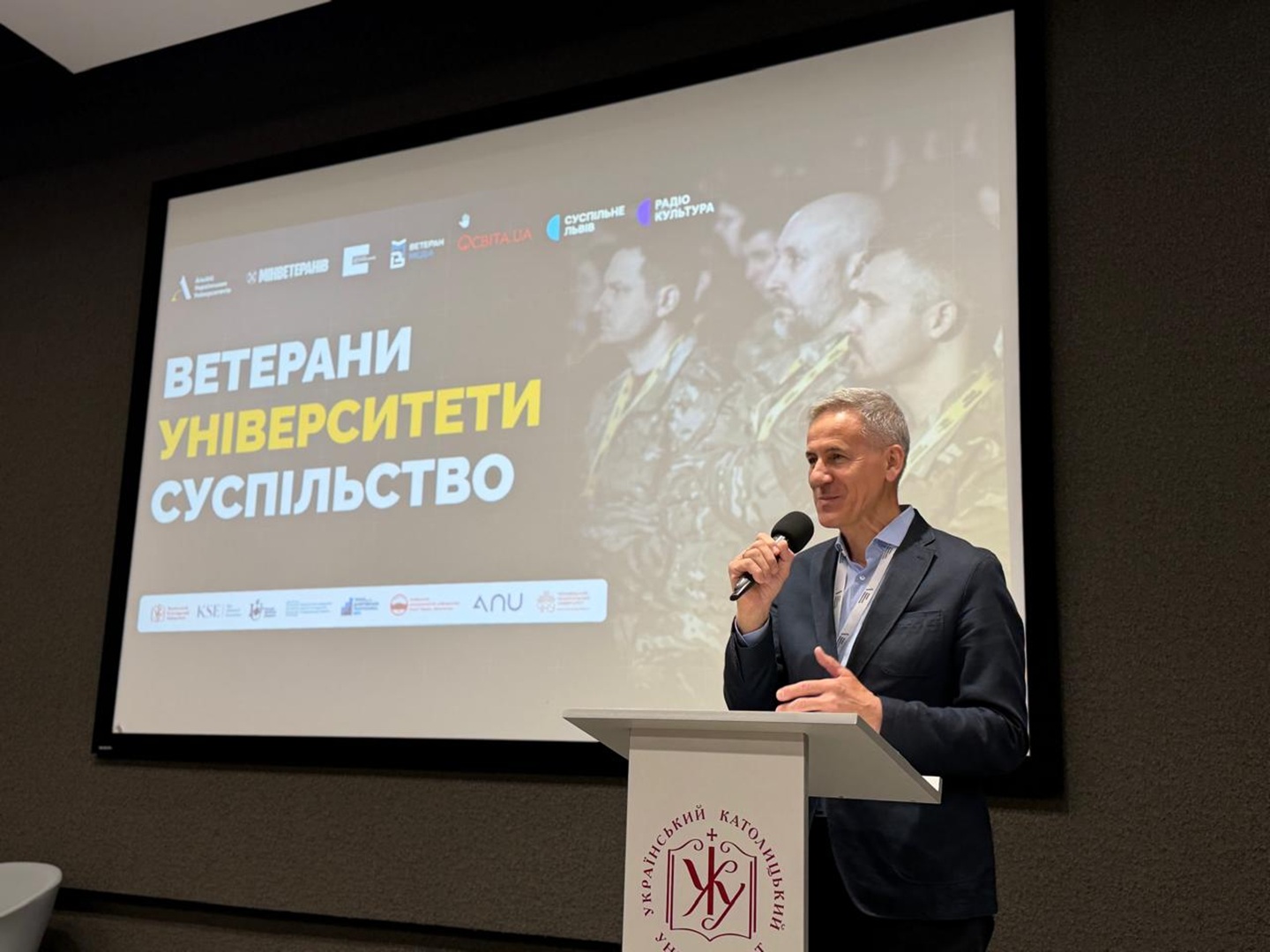
In his speech, Vasyl KARPUSHA emphasized the key role of universities in shaping veteran policy. He noted that institutions of higher education have a potential to serve as a reliable bridge between veterans and society.
“The mission of universities today is to bring veterans and society together. We understand that policies supporting male and female veterans must encompass all areas of the university activities: from education to psychological rehabilitation and social adaptation,” – said the SumDU rector.
Vasyl KARPUSHA emphasized that SumDU is an important part of the Sumy community and is actively developing its efforts to support veterans. In particular, the rector presented the university achievements in this area: activities of the University Clinic, work of the “ReHab SumDU” Center for Physical Therapy and Sports Medicine, and educational programs to train specialists to work with veterans.
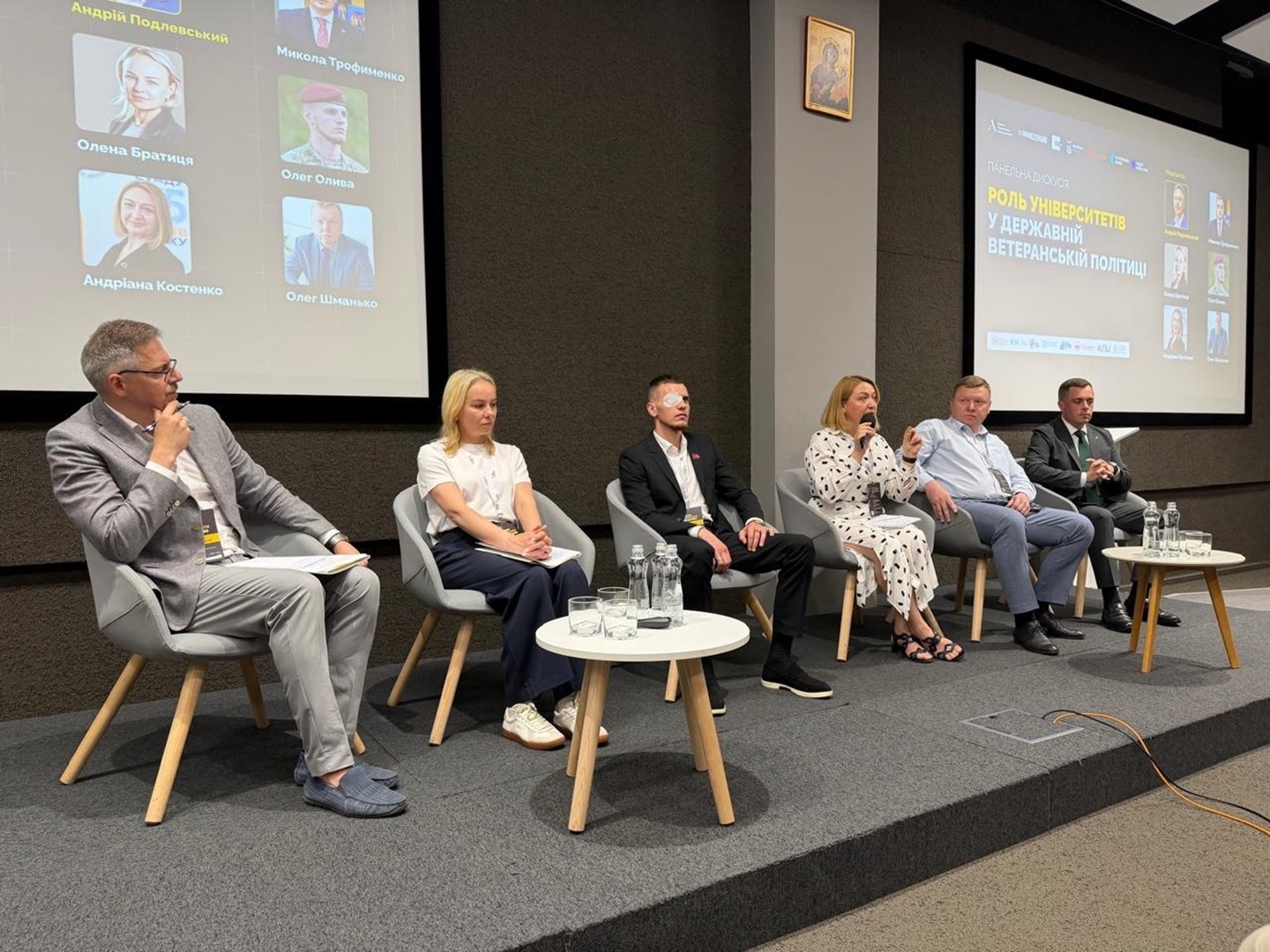
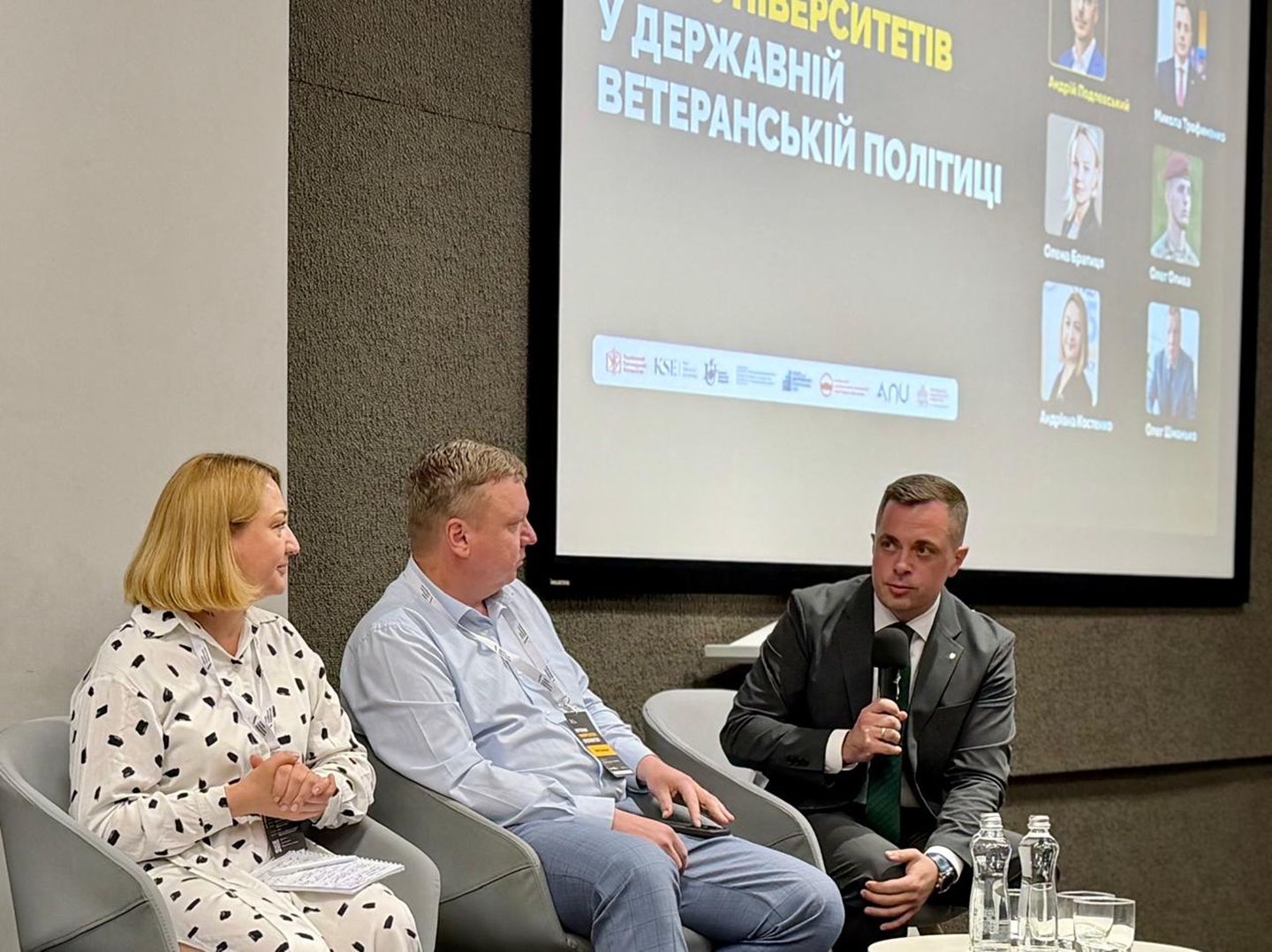
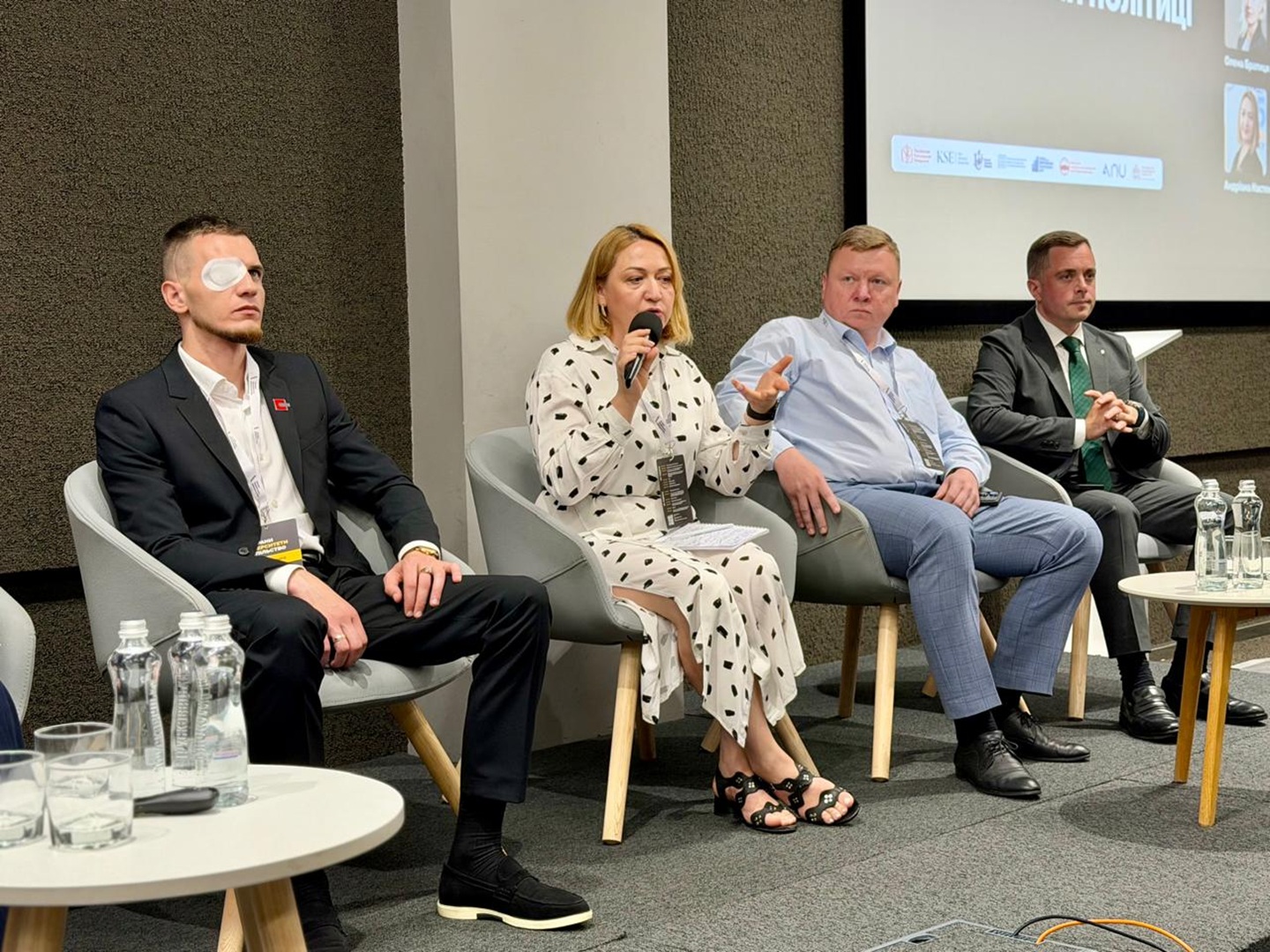
During the panel discussion “The Role of Universities in State Veterans Policy”, Andriana KOSTENKO presented SumDU’s practical experience in researching veterans’ needs and developing tools for their reintegration. According to her, universities should play a much broader role in implementing veteran policy than simply providing educational opportunities.
“A university is about innovation, education, and its third mission. At all these levels, we can contribute to implementation of veteran policy: from researching veterans’ needs to developing methods for reintegration and community support”, – emphasized Andriana KOSTENKO.
She spoke about research projects of the SumDU Center for Social Research, which annually monitors needs, physical and mental health, social support, and life satisfaction of veterans in the Sumy Oblast. Based on this data, the university develops practical approaches to social adaptation and reintegration of veterans into active civilian life.
Adriana KOSTENKO focused particular attention on development of local communities. The SumDU representative shared her experience collaborating with the region to shape local policies for veteran reintegration and develop local support systems.
“When we talk about veteran reintegration, it’s important to understand that this is a much broader concept than social support. Ukraine currently lacks experience in providing comprehensive reintegration services. At SumDU, we held three camps for veterans and their families, where, together with psychologists and other specialists, we developed methods for psycho-emotional stabilization and helping participants envision their future. These approaches have already been documented in methodological guides and can be implemented by other institutions and communities. It is universities, as centers of innovation, that are capable of developing and disseminating such practices,” – noted the researcher.
As for the university’s third mission, it holds particular significance for the frontline region. SumDU is one of the key factors in stability and development of the Sumy Oblast. The university actively collaborates with local government bodies, helping communities shape their own vision of veteran policy. Recently, experts from SumDU held five strategic sessions with communities across the region dedicated to these issues.
Outcomes and results of the forum
The forum served as an important platform for exchanging experiences and forming a shared vision of the role of universities in creating conditions for veterans’ successful adaptation to civilian life, education, and professional fulfillment.
During the forum, the best practices from Alliance member institutions in the field of veteran support were presented, including activities of veteran offices and programs for adaptation, rehabilitation, retraining, and social support for veterans and their families. In particular, our university presented work of the “ReHab SumDU” Center through a video presentation, in which not only the Center’s specialists but also veteran patients who had undergone rehabilitation there spoke about effectiveness of physical rehabilitation and recovery programs.
All forum participants had an opportunity to discuss findings of a study by the Ukrainian Veterans Fund on educational opportunities for veterans.
Participants developed a draft veteran policy for educational institutions, a self-assessment tool for internal university audits, and recommendations for cooperation with communities and employers.
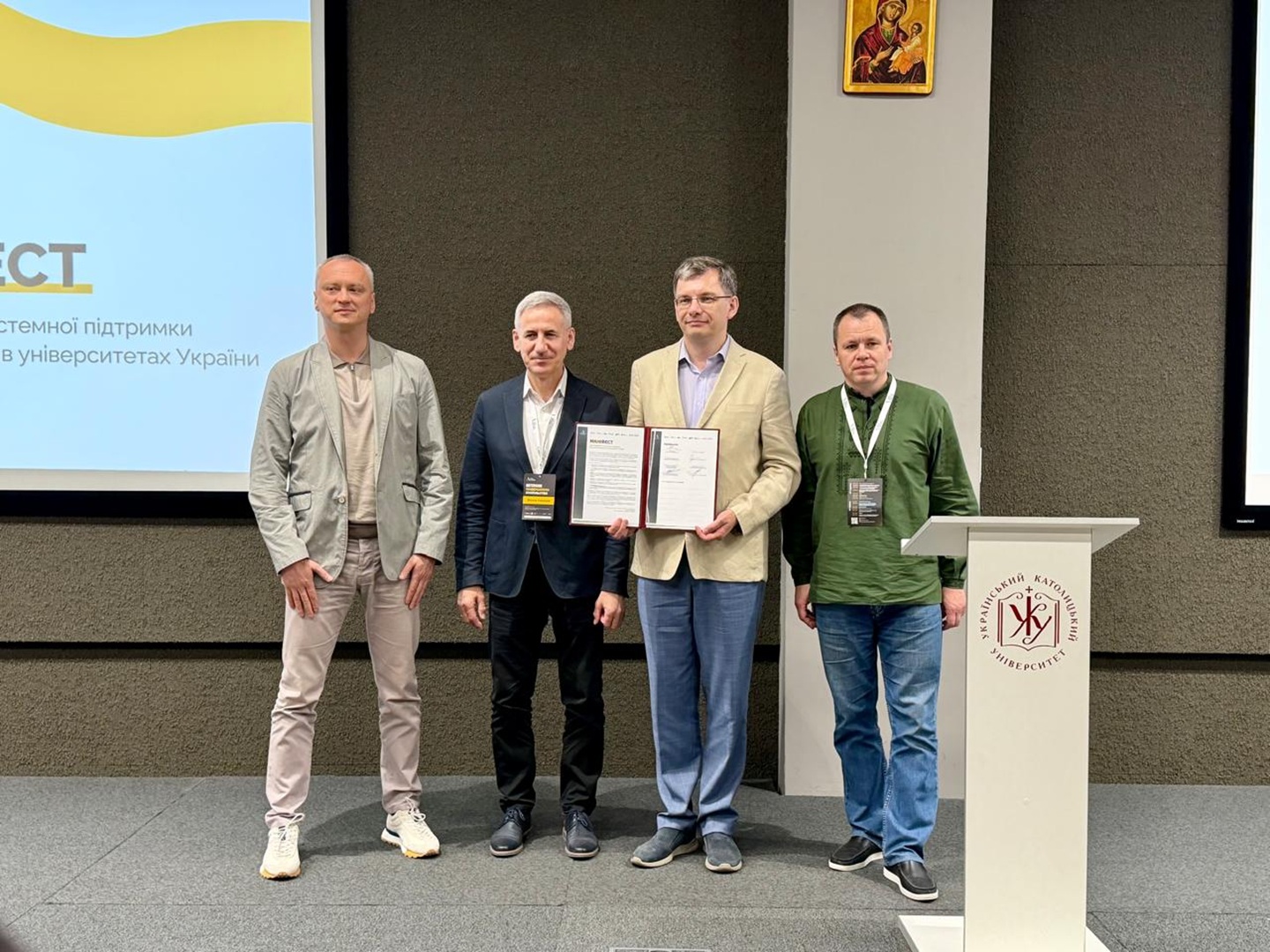
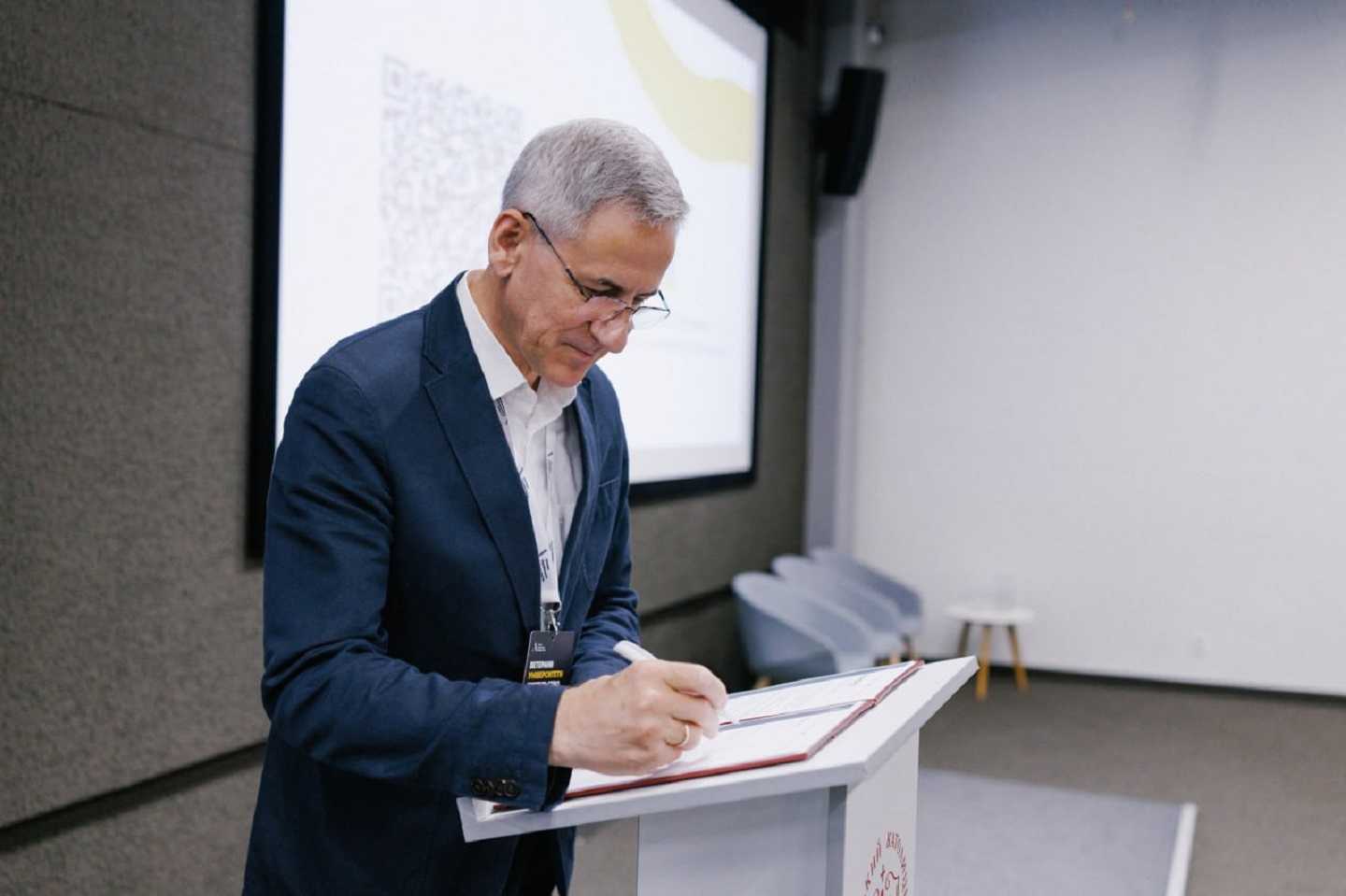
A key outcome of the forum was signing the Manifesto on Implementation of Systematic Support for Male and Female Veterans in Ukrainian Higher Education Institutions. The document affirms universities’ readiness to implement established standards for veteran policy, conduct internal audits of their capacity to work with veterans and their families, develop comprehensive mechanisms for educational, psychological, social, and career support, and strengthen cross-sectoral partnerships in this area.
Forum participants called on other educational institutions, government agencies, local communities, civil society and veterans’ organizations, charitable foundations, business community, and international partners to join in implementing initiatives and to use the forum outcomes to develop their own programs of supporting male and female veterans.