 укр
укр  eng
eng 

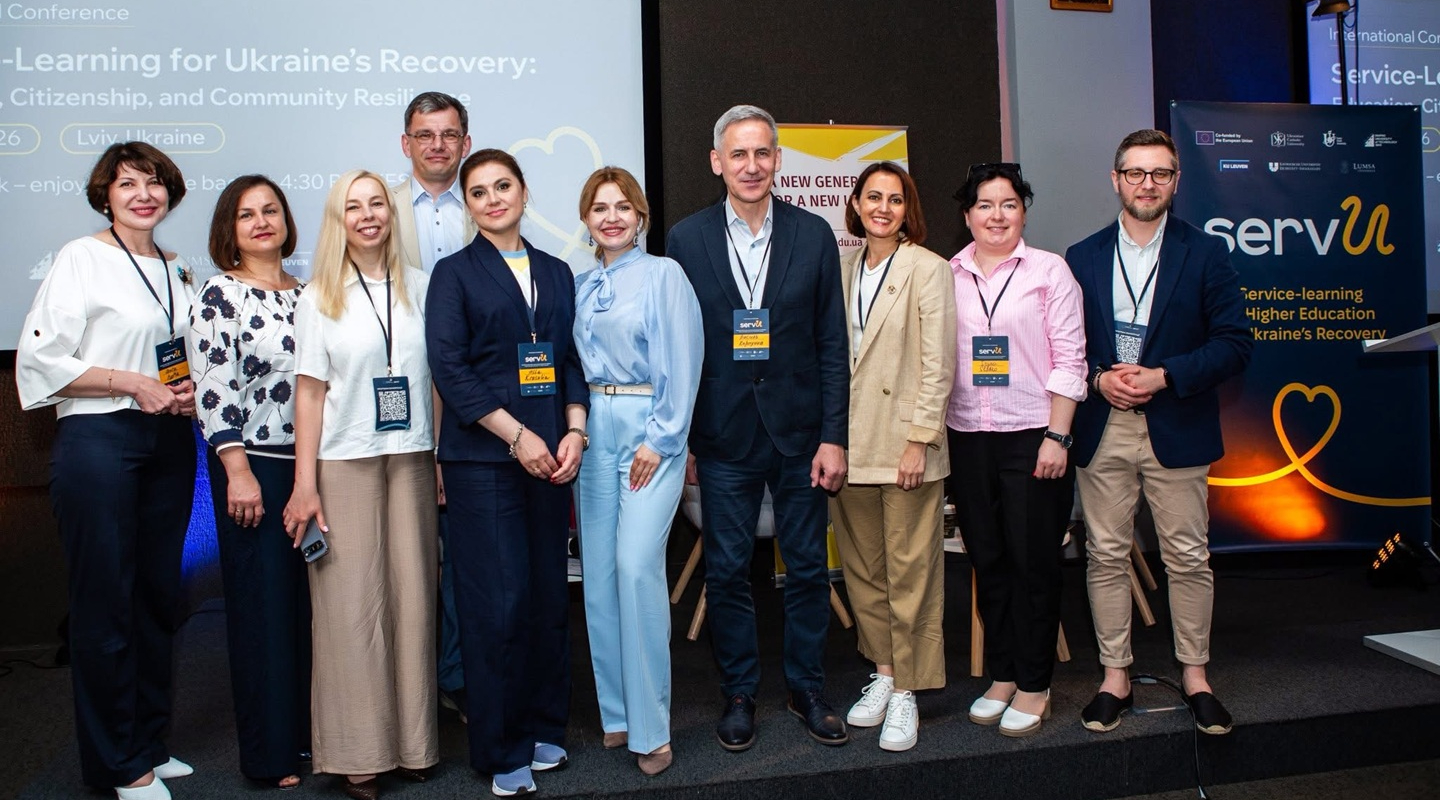
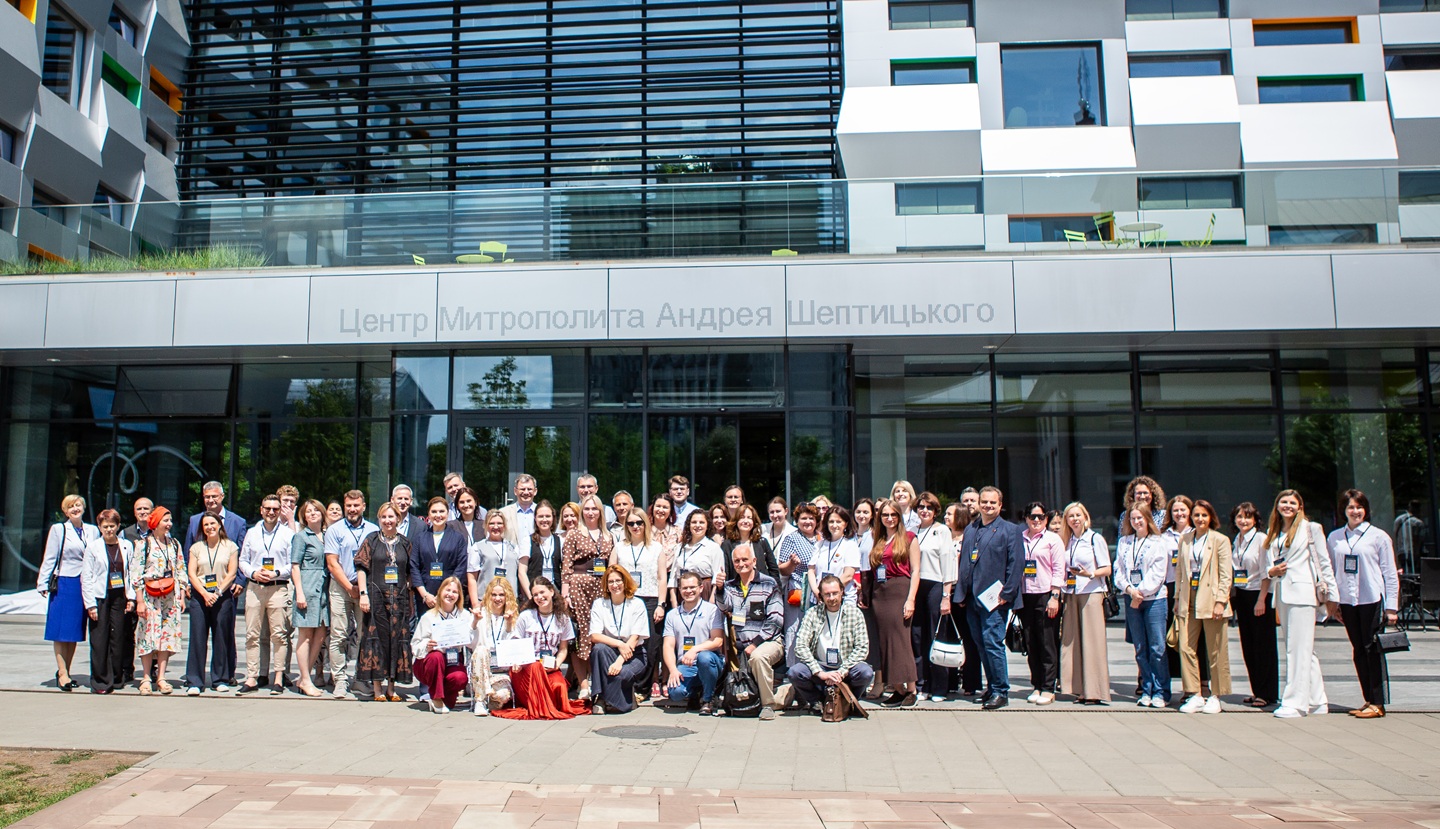
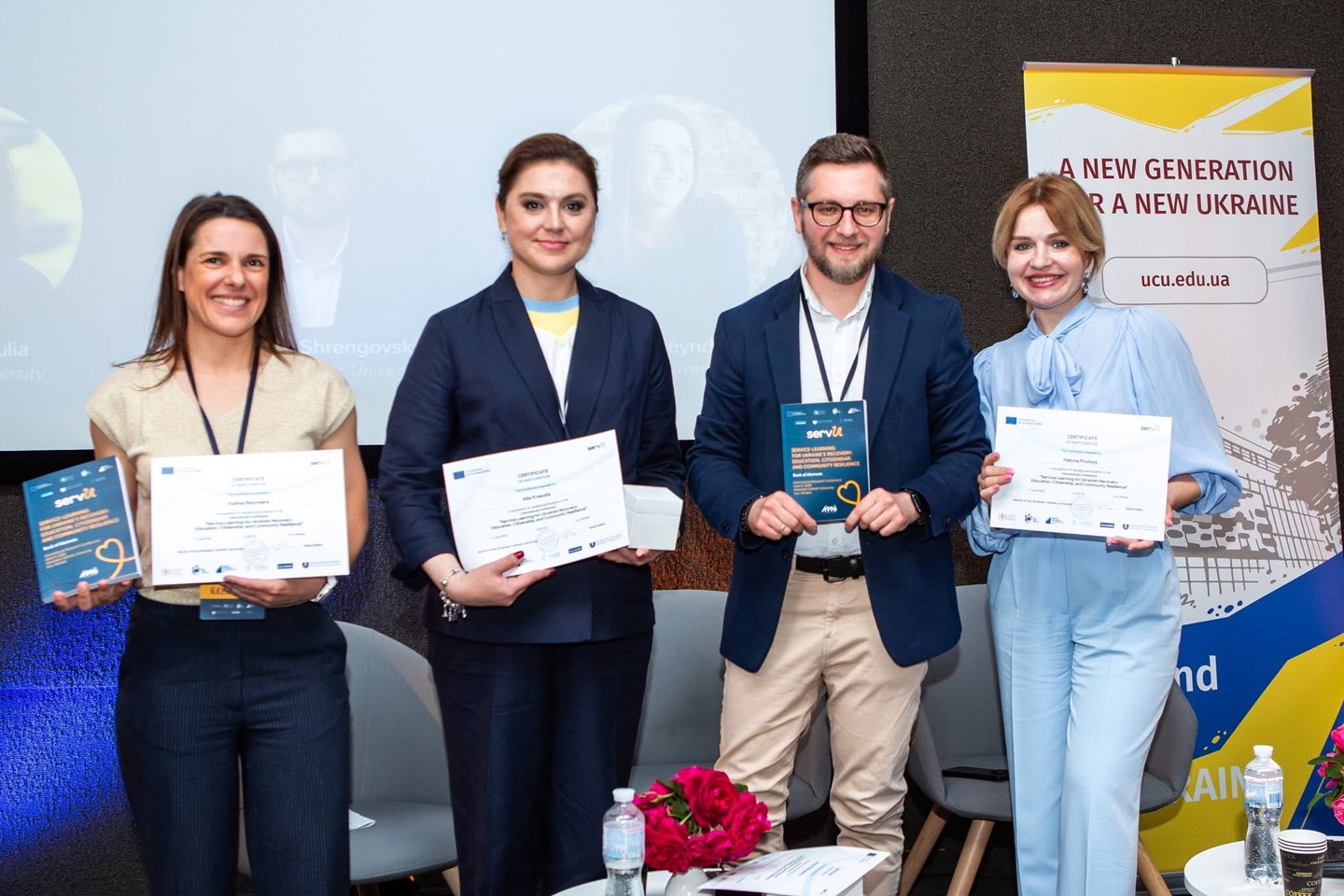
On June 8–10, the Ukrainian Catholic University in Lviv hosted the international scientific conference “Service-Learning for the Recovery of Ukraine: Education, Citizenship, and Community Resilience”. The conference marked the concluding event of the Erasmus+ project "Service-Learning in Higher Education for Ukraine's Recovery (ServU)" (Project No. 101128922 – ServU – ERASMUS-EDU-2023-CBHE).
The event brought together representatives of Ukrainian and European universities, local governments, civil society organisations, and territorial communities to explore effective approaches to Ukraine's recovery through education, civic engagement, and human capital development.
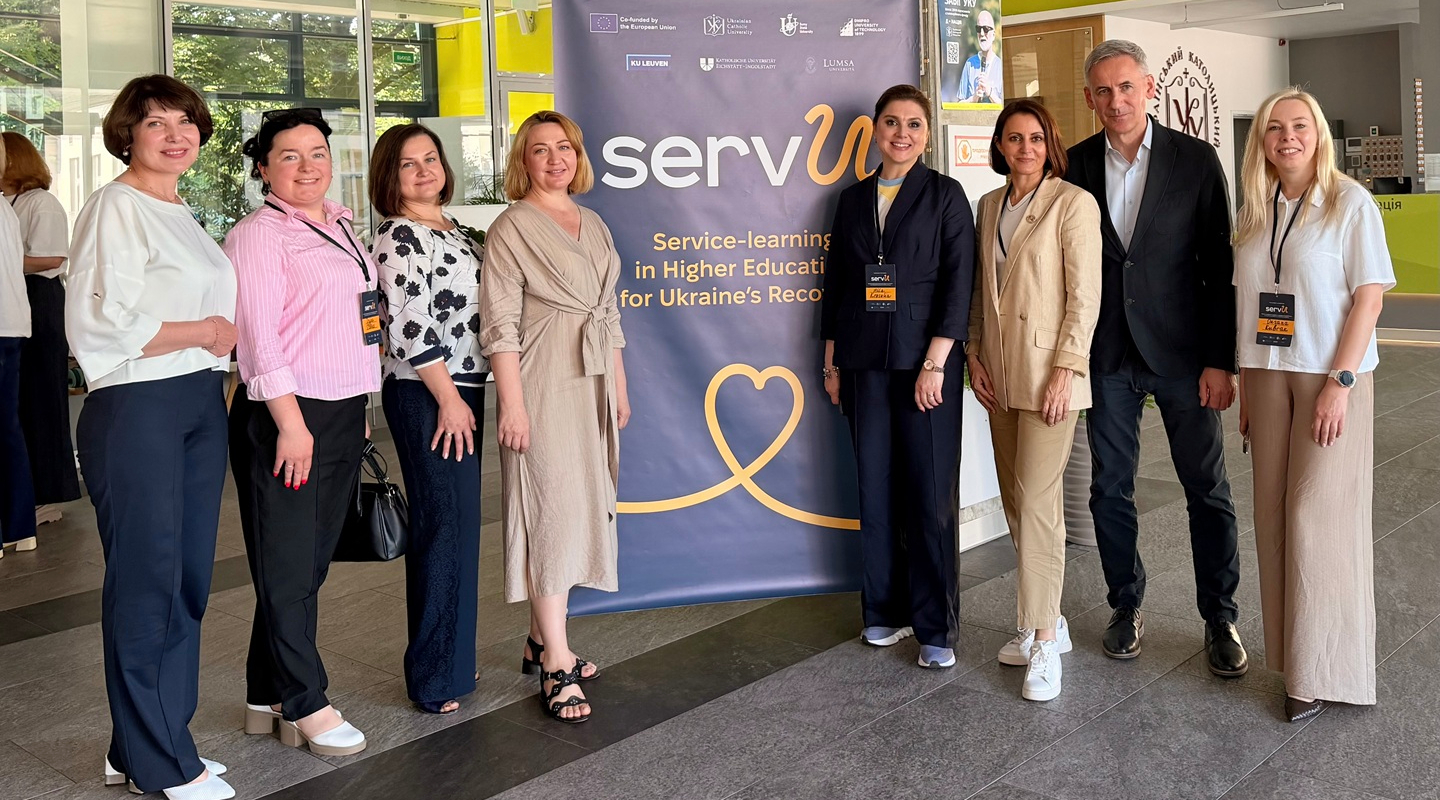
Sumy State University was represented by a delegation comprising Rector Vasyl KARPUSHA; ServU Project Coordinator and Head of the International Relations Office Alla KRASULIA; Deputy Head of the International Relations Office Tetyana MAYBORODA; Head of the General Administration and International Protocol Unit Iryna SLABKO; Head of the Higher Education Quality Assurance Centre Olha LIUTA; Head of the Higher Education Quality Monitoring Bureau Olha DEINEKA; Head of the Department of Psychology, Political Science and Sociocultural Technologies Andriana KOSTENKO; and Oksana KUBRAK, Head of the Strategic and Socio-Economic Development Department of the Sumy City Council.
The conference served not only as a platform for presenting the outcomes of the three-year international consortium but also as a forum for reflecting on the evolving role of universities in Ukraine's recovery during the war and the country's post-war transformation.
The ServU project (No. 101128922) is implemented under the Erasmus+ Capacity Building in Higher Education programme and coordinated by the Ukrainian Catholic University. The consortium brings together six higher education institutions: the Ukrainian Catholic University, Sumy State University, Dnipro University of Technology, KU Leuven (Belgium), Katholische Universität Eichstätt-Ingolstadt (Germany), and LUMSA University (Italy). The project aims to introduce and advance the service-learning methodology, which integrates academic learning with addressing real community needs.
This approach has become particularly relevant in the Ukrainian context. Service-learning enables students not only to acquire academic knowledge but also to apply it by supporting communities, working with vulnerable groups, fostering local initiatives, and addressing pressing social challenges. In this way, universities become active contributors to the recovery and sustainable development of their regions.
For the Sumy region, which has been living under constant military threat for the fifth consecutive year, these issues are especially significant. Supporting internally displaced persons, strengthening social cohesion, developing entrepreneurial skills, providing psychological support to children and young people, and restoring human capital are among the key challenges currently facing local communities.
This is why Sumy State University became one of the project's key partners, working closely with the communities of Sumy, Konotop, and Putyvl. The University actively engaged local authorities, educators, civil society organisations, businesses, and representatives of diverse social groups. A series of focus group studies helped identify the communities' most pressing needs, which formed the basis for educational solutions with tangible, practical impact.
Among the project's most significant achievements at SumDU was the introduction of two pilot courses based on the service-learning methodology. Victoria PETRASHENKO'S course, "Supporting Children's Mental Health," focused on building resilience and providing psychological support for children and adolescents. At the same time, Anastasiia SAMOILIKOVA’S course, "Entrepreneurship and Digital Business Communications," strengthened entrepreneurial and digital competencies among community members, particularly women of different ages and social backgrounds.
Importantly, Sumy State University not only implemented innovative educational initiatives but also played a leading role in ensuring the overall quality of the project. The SumDU team led the Quality Assurance Work Package, overseeing project monitoring, impact assessment, the development of evaluation tools, and recommendations to ensure the long-term sustainability of the project's outcomes.
The University's achievements were presented at the conference and documented in the international conference proceedings. The publication includes contributions from SumDU researchers highlighting the University's experience in implementing service-learning during wartime, advancing international cooperation, and ensuring the quality of these educational practices. In particular, SumDU authors presented papers on the role of international cooperation in strengthening university resilience during the war and on tools for evaluating the quality and impact of service-learning initiatives.
The conference programme focused not only on the achievements of the project but also on the future development of service-learning in Ukraine and across Europe. Three panel discussions brought together community representatives, experts from partner universities, and university leaders.
During the panel discussion on university-community cooperation, participants explored how higher education institutions can help communities become more resilient and better equipped to respond to the challenges posed by the war.
Oksana KUBRAK, Head of the Strategic and Socio-Economic Development Department of the Sumy City Council, highlighted:
"Today, it is critically important for communities to have a university partner that not only educates students but also helps find solutions to real-life challenges. Through ServU, we have seen that students and academic staff can become a powerful resource for community development. This kind of collaboration fosters trust, strengthens social cohesion, and creates new opportunities for regional recovery."
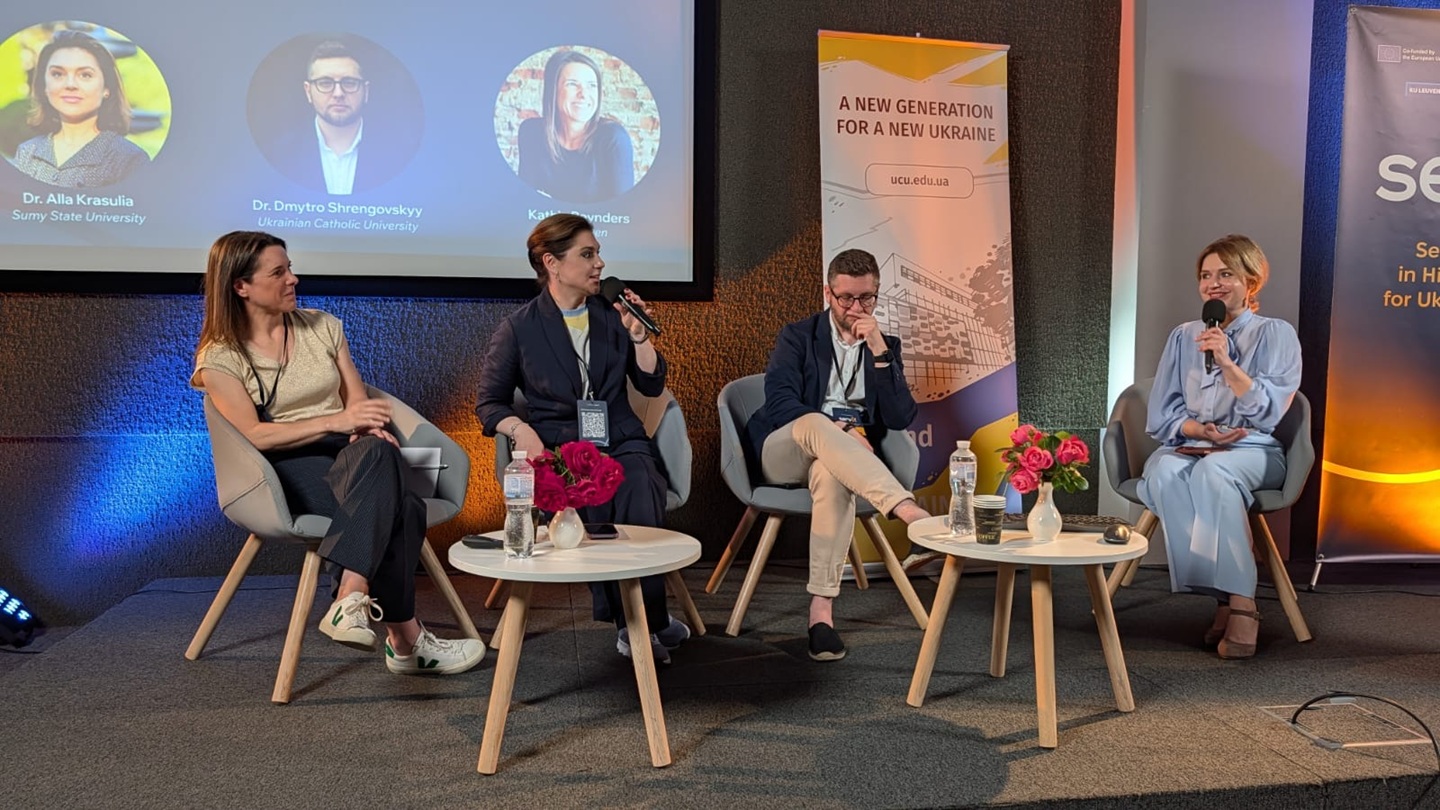
During the international panel discussion on sustaining the project's outcomes beyond the grant period, Alla KRASULIA, Head of the International Relations Office at Sumy State University, presented her vision for expanding the international dimension of service-learning.
"Not every student can cross a national border, but every student can cross the boundaries of their own experience and discover the world through collaboration with other people and communities. That is why the next stage of ServU should focus on developing international courses, COIL projects, blended intensive programmes, and joint educational initiatives where students from different countries work together on shared societal challenges while remaining in their own communities. We also see great potential in international tandem teaching, where Ukrainian and European academics co-design and co-deliver courses, combining different academic traditions, community experiences, and local contexts. This approach enables students not only to learn about international experience but to create it together. The next step should be the launch of new practice-oriented international projects and a platform for academic and student tandems that will promote the philosophy of service-learning across all disciplines – from medicine and education to business, engineering, and the social sciences. I am convinced that the future of service-learning lies in learning in communities, with communities, from communities, and for communities, regardless of national borders. This is how universities can foster a new culture of international cooperation based on reciprocity, solidarity, and the joint search for solutions to societal challenges," said Alla KRASULIA.
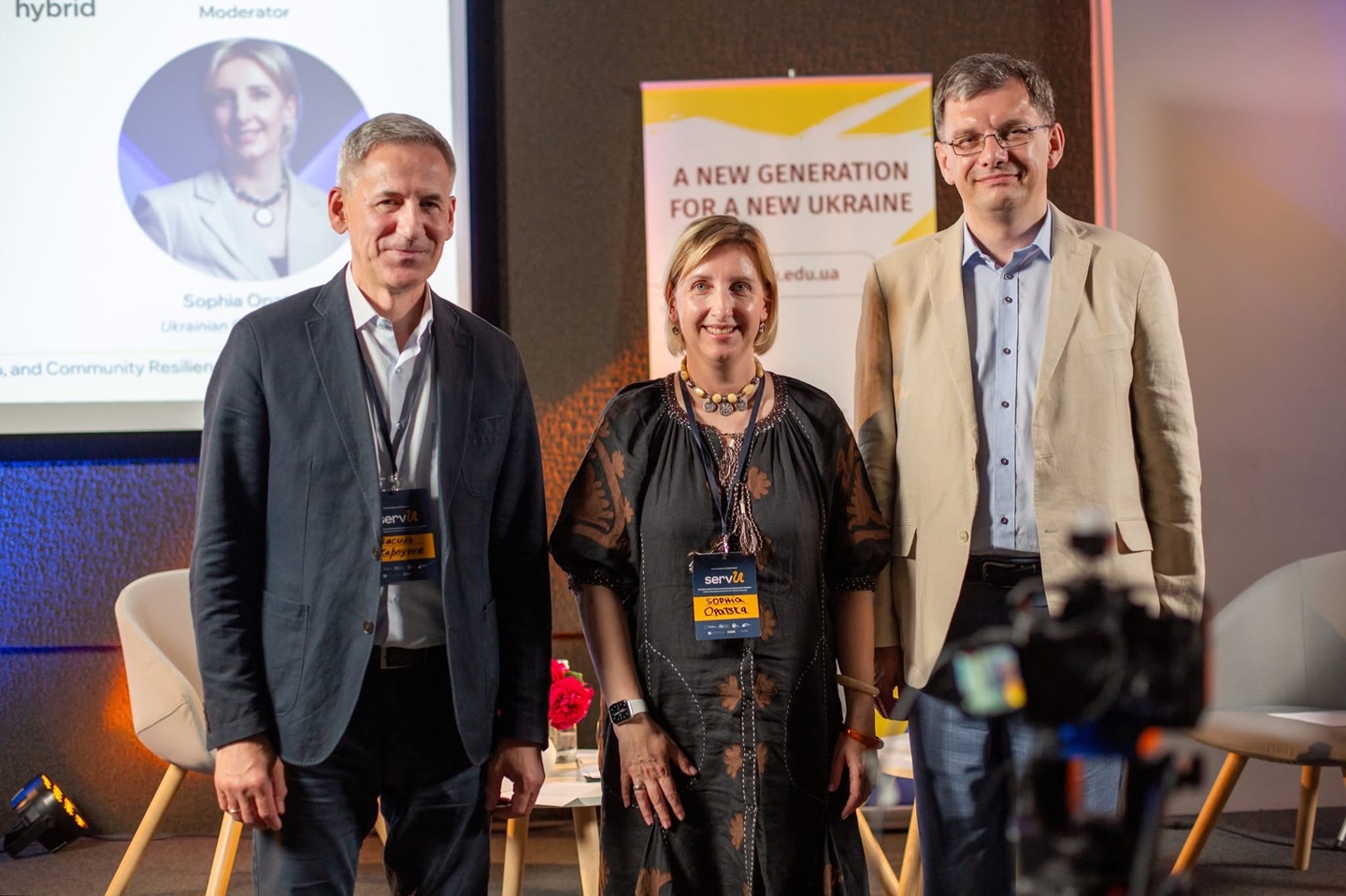
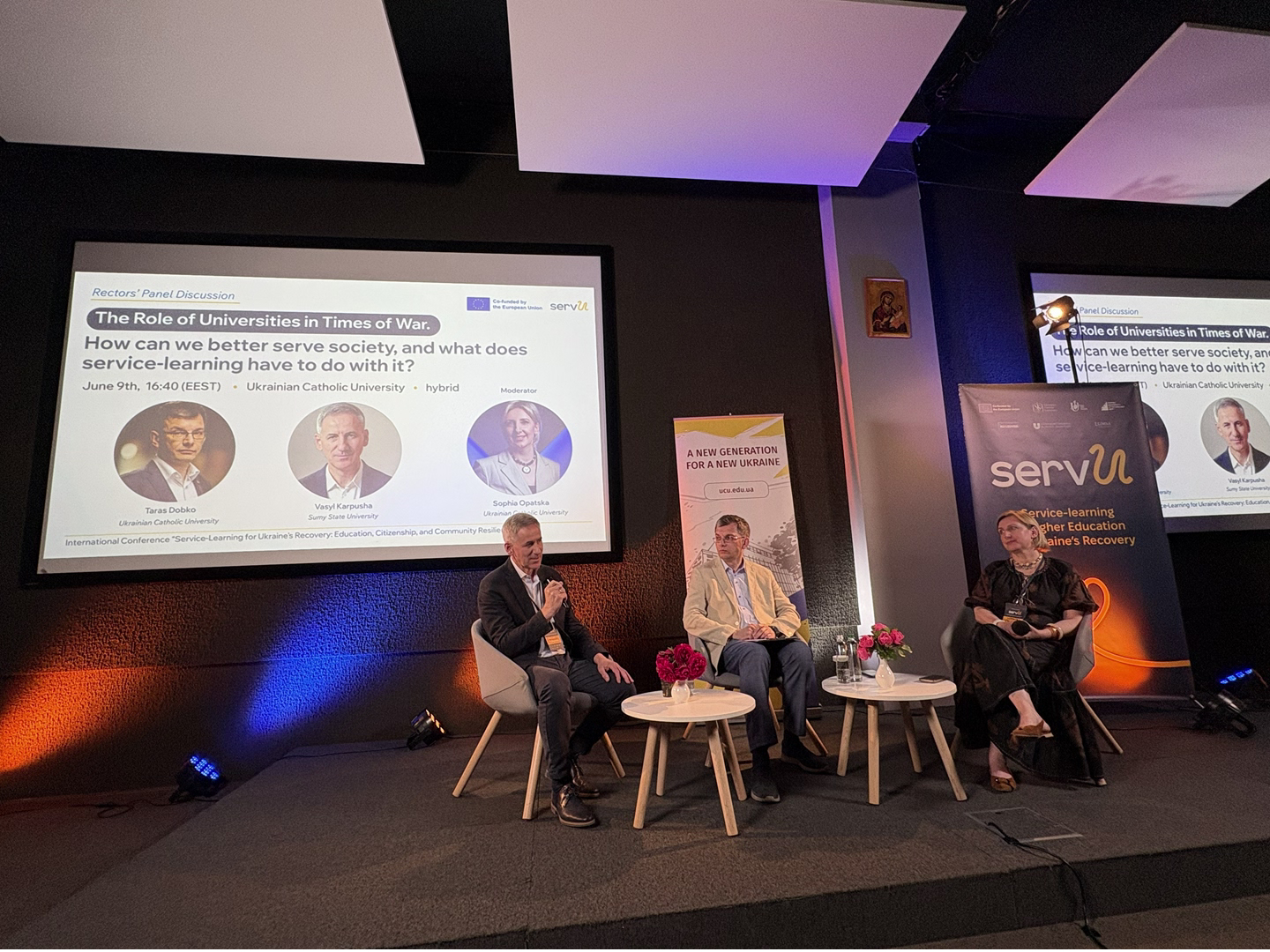
Another highlight of the conference was a panel discussion featuring Rectors from partner universities on the role of higher education institutions in times of war.
Vasyl KARPUSHA, Rector of Sumy State University, emphasised that the modern university has long since expanded beyond its traditional missions of teaching and research.
"For Sumy State University, participation in the ServU project provided an opportunity to rethink the relationship between the university and the community. During the war, we have come to realise more acutely than ever that a university cannot exist separately from society. Communities need expertise, innovative ideas, and human potential, while universities possess knowledge, experience, and young people who are ready to contribute to solving real-world problems. For us, service-learning is therefore not merely an educational methodology but a mechanism for building sustainable partnerships between universities and communities. It enables students to see the practical value of their knowledge while providing communities with meaningful solutions to pressing challenges. ServU has demonstrated that this form of cooperation creates a new quality of engagement, where the university is no longer an external expert but a genuine partner in community development. I am convinced that the future of Ukrainian universities lies in an even closer integration of education, research, and service to society. Through partnerships with communities, we can not only respond to the consequences of war but also jointly build the foundations for Ukraine's long-term recovery and development," the SumDU Rector highlighted.
In addition to the academic programme, conference participants visited the UNBROKEN National Rehabilitation Centre, a powerful symbol of Ukraine's resilience and a successful example of collaboration among the healthcare, education, and community sectors. The delegations also visited the Garrison Church of Saints Peter and Paul in Lviv. These visits served as a powerful reminder that service-learning is ultimately centred on people – their needs, dignity, and capacity to recover even under the most challenging circumstances.
Sumy State University's participation in the ServU Conference once again demonstrated that a modern university is not only a centre of education and research but also an active community partner capable of generating solutions for society, strengthening resilience, and making a meaningful contribution to Ukraine's recovery.
This material was produced with the co-funding of the European Union. It reflects the views of the ServU project and does not necessarily represent the official position of the European Union.