 укр
укр  eng
eng 

The war has confronted Ukrainian universities with unprecedented challenges – from ensuring safety and preserving academic teams to strategic governance, international cooperation, and post-war recovery. Under these conditions, new leadership models are emerging – models capable of ensuring resilience and sustainable development in higher education. One such initiative is the international project THEA Ukraine Lead, already referred to as a leadership school for Ukrainian universities in times of war.
Its concept, outcomes, and the role of Sumy State University (SumDU) are discussed in an interview with the project coordinators: Dr. Alla Krasulia, Head of the International Relations Office, PhD in Pedagogy, and Dr. Dmytro Tsyhaniuk, Director of the Department for Human Resources and Academic Staff Development, PhD in Economics.
A “Leadership School” for Universities in Times of War
– Ms. Krasulia, Mr. Tsyhaniuk, during the autumn semester of the 2025–2026 academic year, three key events took place within the THEA Ukraine Lead – Training for Higher Education Administrators and Leaders in Ukraine project. It is already being called a “leadership school for Ukrainian universities in wartime.” What makes this project unique, and how did SumDU become involved?
Alla KRASULIA:
THEA Ukraine Lead is a joint initiative of Sumy State University and Münster University of Applied Sciences (FH Münster, Germany) aimed at developing managerial and leadership competencies among leaders of Ukrainian universities under the extremely challenging conditions of war. The project not only helps higher education institutions maintain operational viability but also supports their development – through strengthening institutional resilience, updating governance approaches, and rethinking international cooperation.
For SumDU, which serves as the Ukrainian-side coordinator, this project is also an opportunity to share crisis-management experience gained during years of war.
Kick-Off Workshop 2025: Strategic Leadership During Wartime
– From October 29 to 31, 2025, a kick-off workshop was held within the THEA Ukraine Lead project. What were its main objectives and outcomes?
Dmytro TSYHANIUK:
This workshop served as a launch platform for the first cohort of 15 university administrators from across Ukraine. Over three days, participants worked on strategic management, situational leadership, and the development of individual leadership styles in the context of war-related challenges, post-war recovery, and European integration.
As SumDU project coordinators, we moderated sessions focused on leadership competence development and facilitated small-group work where participants developed institutional development scenarios under various wartime conditions. They analyzed four leadership dimensions, discussed the role of values in building effective teams, and emphasized the importance of humanity in governance.
Background Information
The training team included leading higher-education governance experts from Germany, Finland, and Ukraine:
- Prof. Dr. Frank Ziegele – Director of the Centre for Higher Education (CHE), expert in higher-education policy and strategic university management;
- Dr. Kai Handel – Higher education management and research specialist, Osnabrück University of Applied Sciences;
- Kateryna Suprun – Lecturer at the Faculty of Management and Business, Tampere University (Finland), expert in humanitarian approaches to education governance in crisis contexts;
- Dr. Alla Krasulia – Head of the International Relations Office at SumDU, THEA Ukraine Lead Project Coordinator;
- Dr. Dmytro Tsyhaniuk – Director of the Department for Human Resources and Academic Staff Development at SumDU, Project Coordinator;
- Petra Pistor – Head of the Quality Assurance Centre Wandelwerk, Münster University of Applied Sciences (FH Münster, Germany), Project Manager;
- Johanna Heinrich – Project Assistant for THEA Ukraine Lead at Wandelwerk FH Münster.
Each trainer presented their vision of a contemporary university operating under uncertainty. Frank Ziegele introduced approaches to building effective institutional development strategies, implementation mechanisms, and resilience frameworks. Kai Handel conducted an interactive session on situational and lateral leadership, focusing on decision-making in complex governance contexts. Kateryna Suprun shared insights into organizing education during humanitarian crises, emphasizing the concept of “resilience vs. robustness.”
Alla KRASULIA:
I moderated the final day of the workshop, presenting SumDU’s experience. The session was built around the Crisis Management Cycle, encompassing six key phases: risk assessment, prevention, preparedness, response, recovery, and learning.
I shared how SumDU navigated destruction, loss, and evacuation while maintaining viability through four “survival arteries”: people, pedagogy, platforms, and partnerships. We discussed “digital shelters,” mirrored servers hosted by EU partner universities, hybrid learning models, and rapid crisis response mechanisms.
Importantly, international alliances – E³UDRES², NEOLAiA, and the Alliance of Ukrainian Universities – have become integral to our resilience system, supporting not only academic continuity but also the psychological well-being of the university community.
This workshop demonstrated that leadership in higher education today is not only about management, but about uniting people and sustaining development even under the most difficult circumstances.
Policy Dialogue 2025: “War, Displacement, and New Opportunities”
– Which wartime challenges for the academic and research community were central to Policy Dialogue 2025, and how did participants address brain drain and the preservation of Ukraine’s academic potential?
Alla KRASULIA:
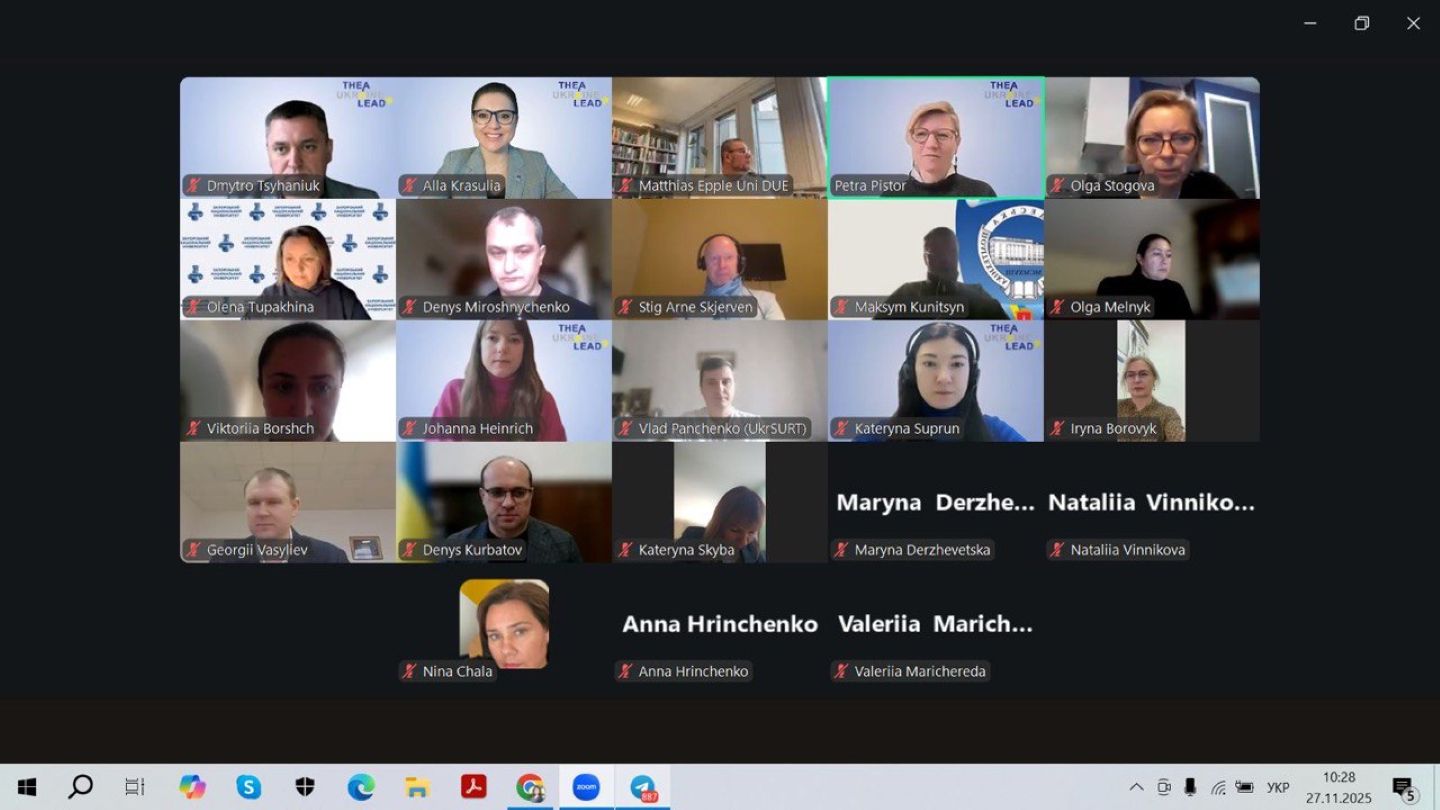
The event, held online on 27 November 2025, became the first large-scale political-academic discussion within THEA Ukraine Lead. Under the theme “War, Displacement, and Opportunity: Shaping the Next Era of Research and Higher Education in Ukraine,” it brought together representatives of universities, government institutions, international organizations, and alumni of previous THEA programs.
The goal was clear: to create a space for an honest dialogue on how the war affects higher education, research, academic mobility, and human capital. We aimed not only to identify challenges, but to formulate concrete solutions that would help Ukrainian universities retain their people and create conditions for the return of those forced to leave.
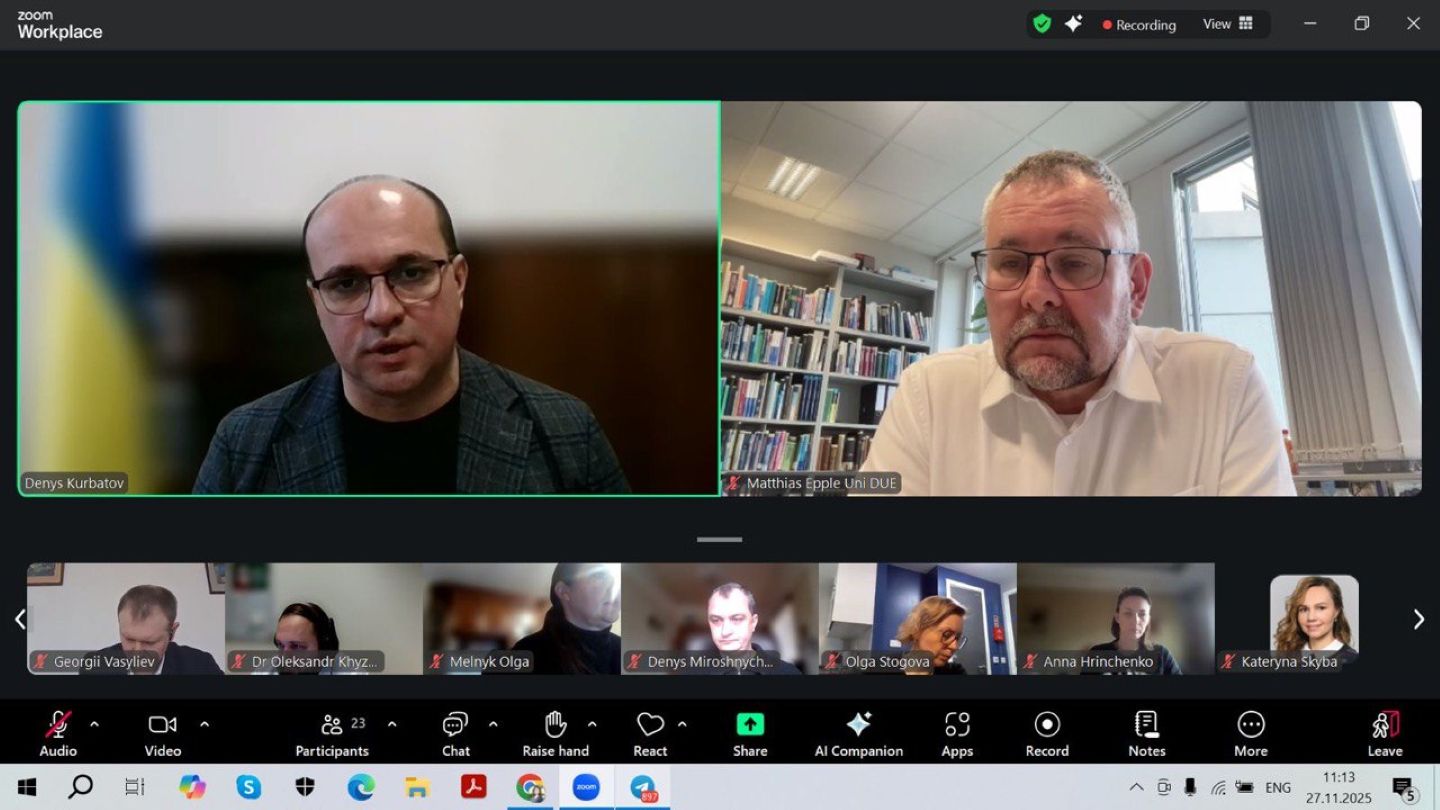
We were honored to welcome Denys Kurbatov, Deputy Minister of Education and Science of Ukraine, and Stig Arne Skjerven, Chair of UNESCO’s Global Convention Bureau on the Recognition of Qualifications.
Dmytro TSYHANIUK:
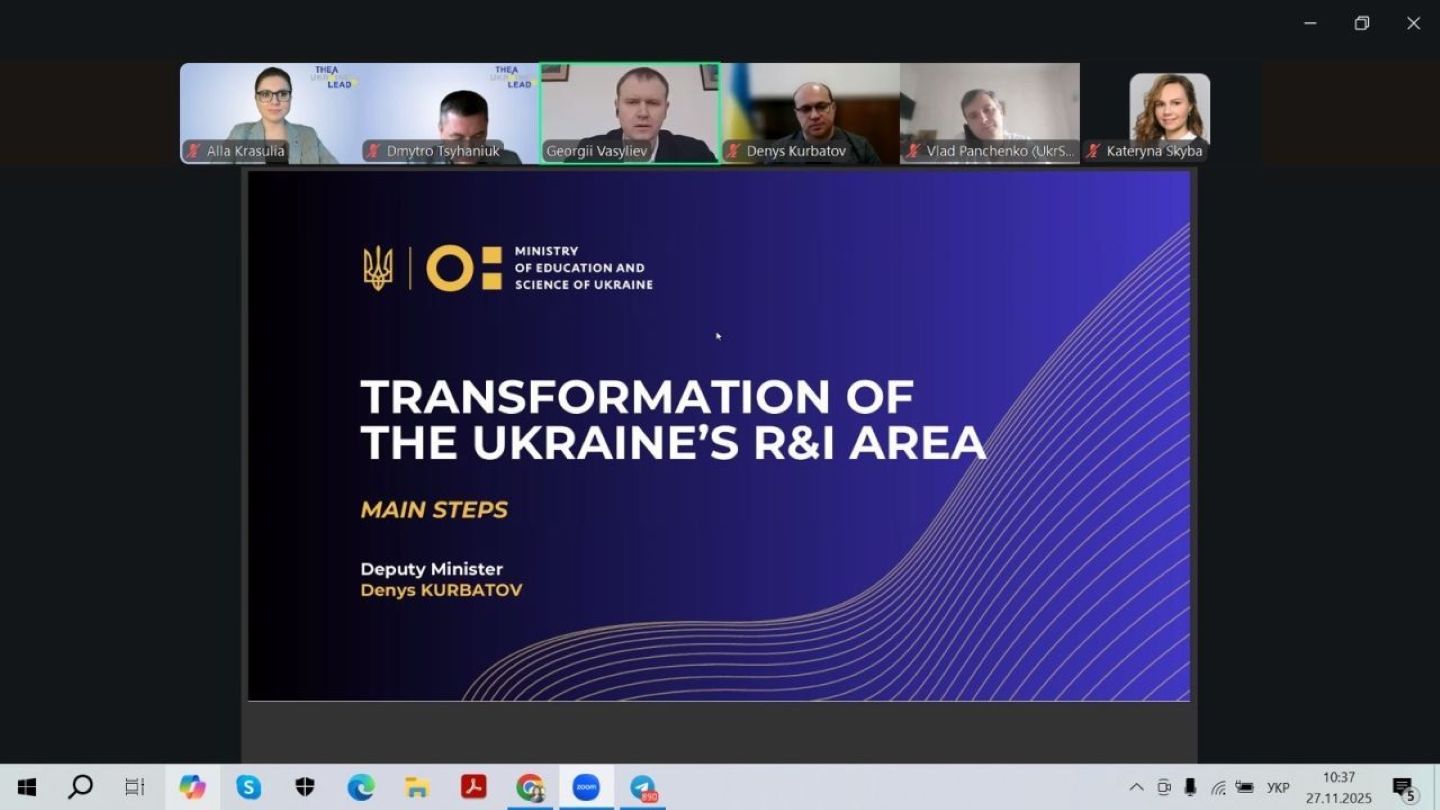
Denys Kurbatov’s keynote set the tone for the discussion. In his presentation “Bridging minds and markets: Advancing research, retaining talent, and driving the reconstruction of Ukraine’s HE space,” he emphasized that scientific development and university autonomy must become the foundation of national recovery.
He highlighted the need to support young researchers who remain in Ukraine and to create mechanisms for the return of scholars working abroad. Equally important was the presentation by Stig Arne Skjerven, who outlined the opportunities offered by UNESCO’s Global Convention on the Recognition of Qualifications. Its ratification opens new pathways for Ukraine’s integration into the international education space – through simplified recognition of diplomas, academic degrees, and credits.
Alla KRASULIA:
Together with Petra Pistor, we moderated the Policy Dialogue, which evolved into a deep exchange among policymakers, university leaders, and academic representatives. We discussed talent drain as both a serious challenge and an opportunity to build a “network of trust” between Ukraine and the world.
We reached a shared understanding that even under crisis conditions, universities can serve as engines of recovery – through international partnerships, educational programs, academic mobility, and leadership development.
Dmytro TSYHANIUK:
For me, this dialogue confirmed that Ukrainian higher education is not merely adapting to new realities, but actively shaping its own voice in global processes. We are not only discussing problems – we are offering solutions, building partnerships, and demonstrating that Ukrainian universities are equal participants in the international academic community.
Policy Dialogue 2025 showed that the future of Ukraine’s higher education lies in resilience, openness, and cooperation – not survival in isolation.
Berlin, December 2025: DUHN Kick-Off Conference
– You participated in the kick-off conference of the German-Ukrainian University Network (DUHN) in Berlin. What was the significance of this event for SumDU and THEA Ukraine Lead?
Alla KRASULIA:
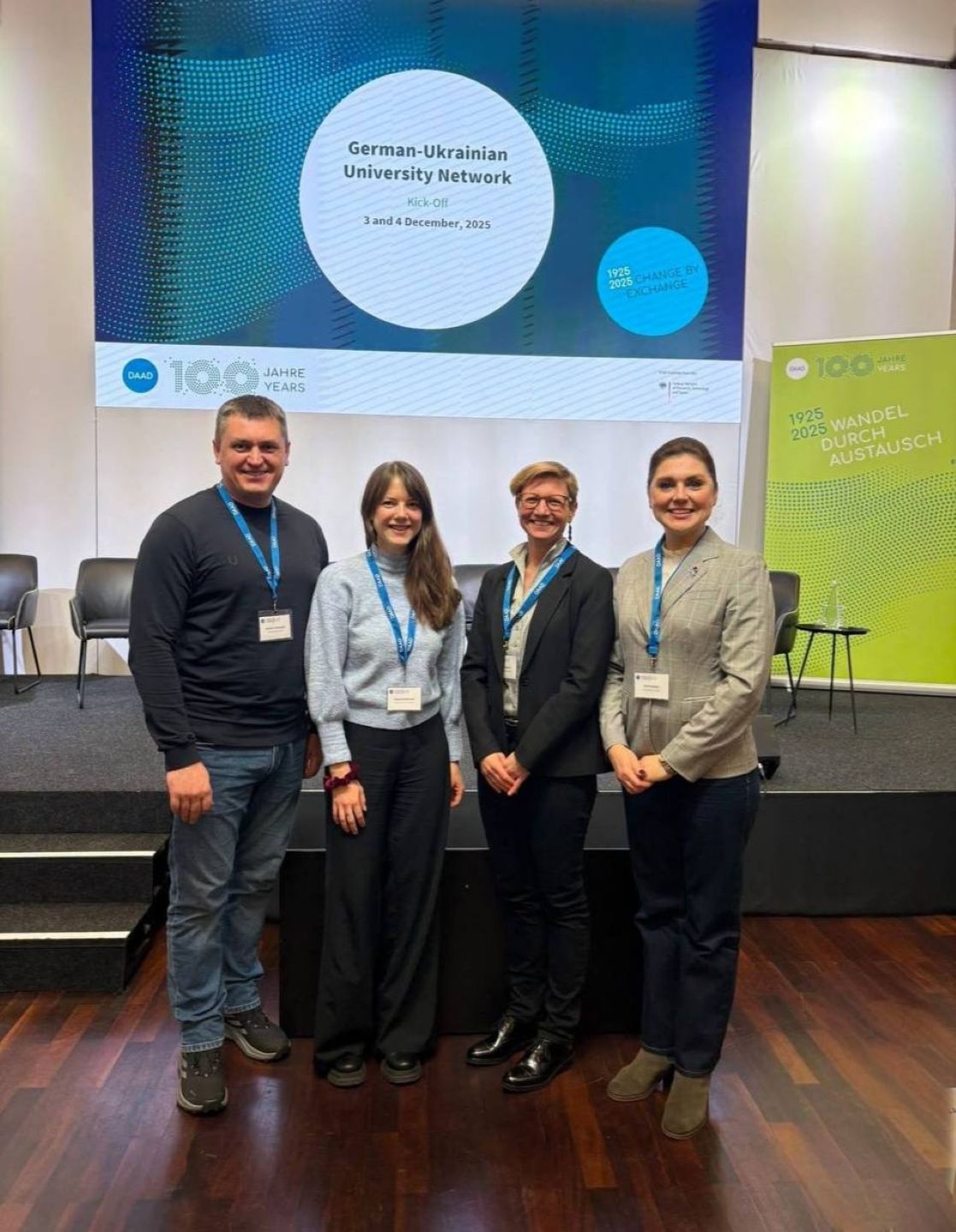
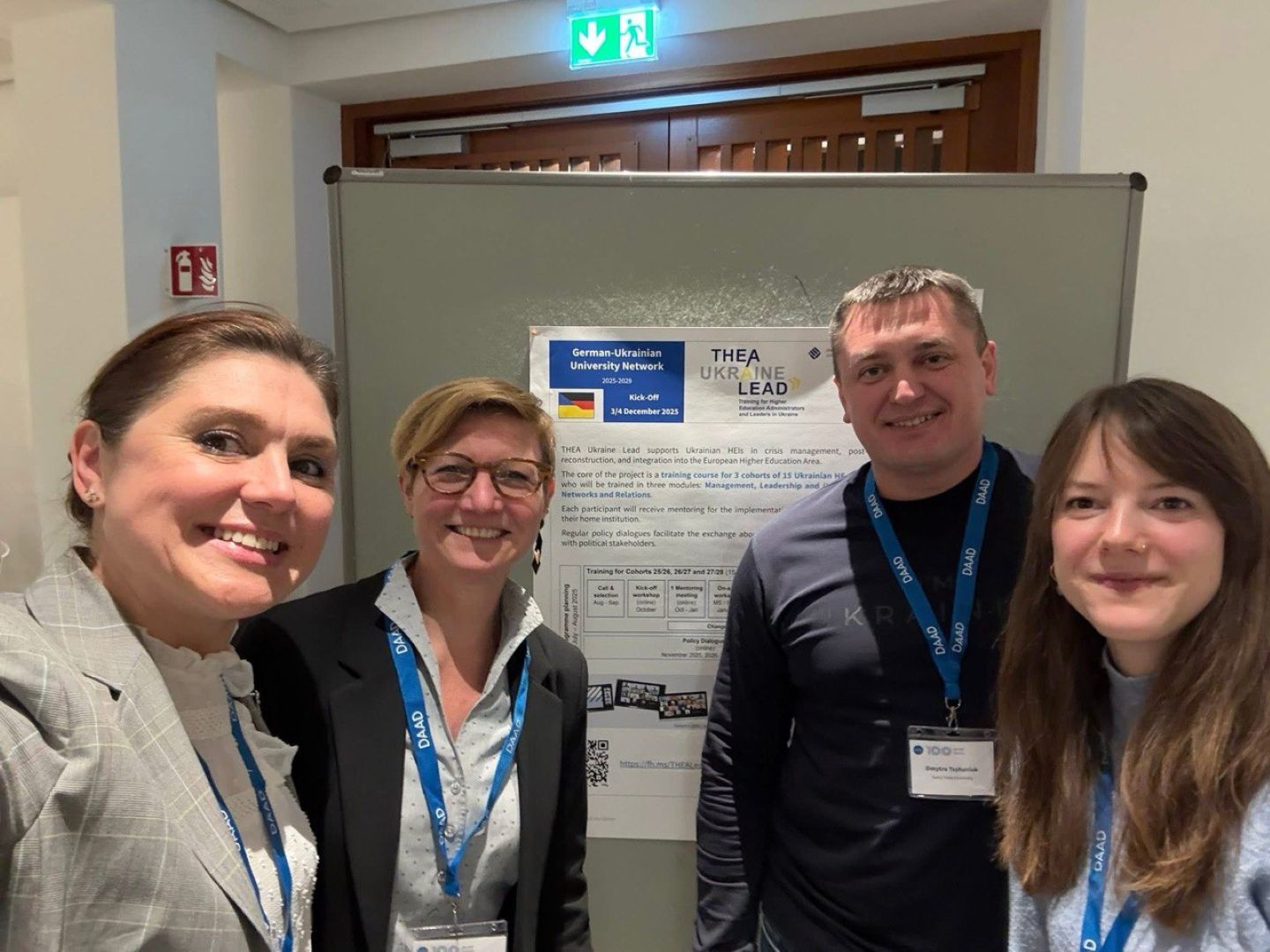
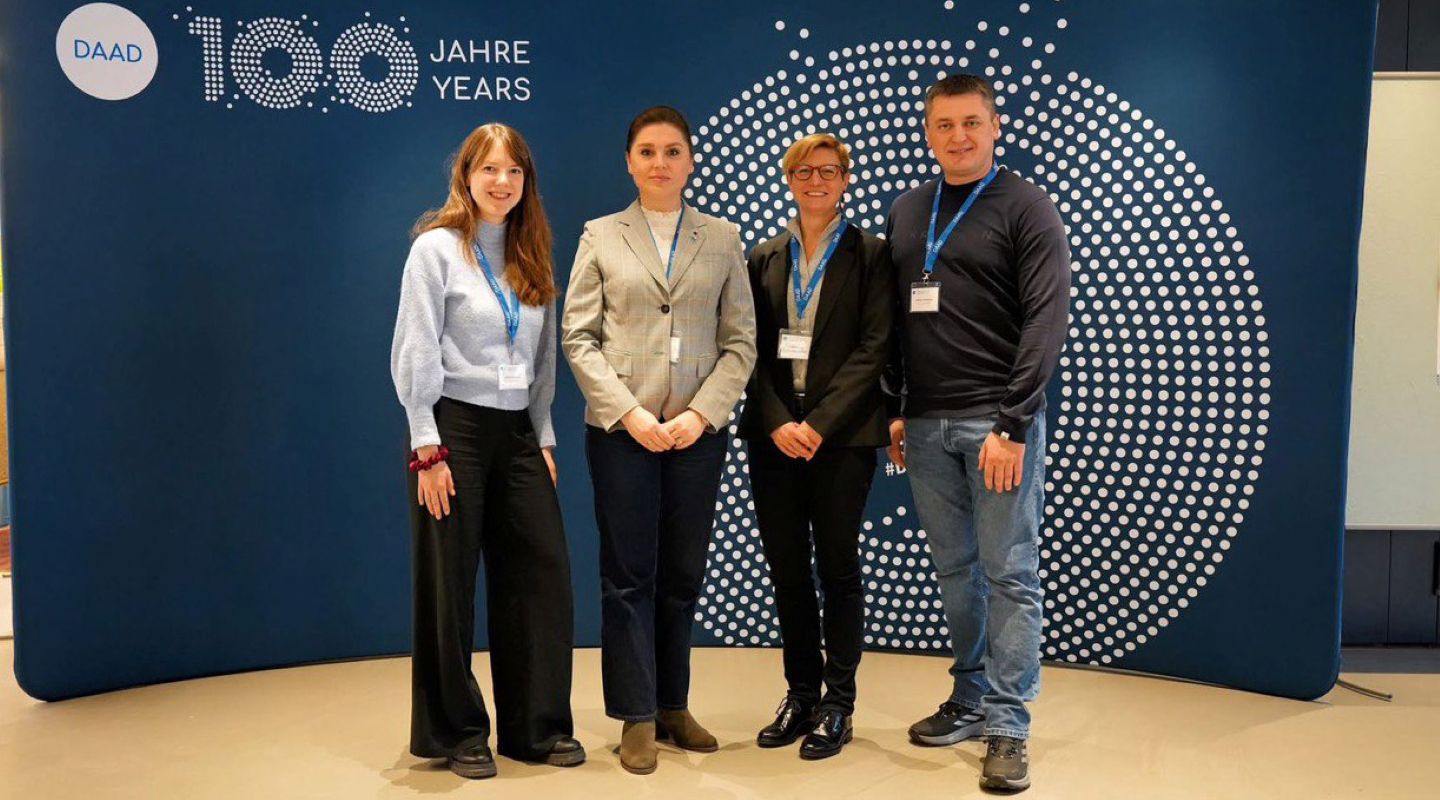
During the DUHN kick-off conference held on 3–4 December 2025 in Berlin, we presented THEA Ukraine Lead as one of the key initiatives aimed at strengthening the governance capacity of Ukrainian universities and supporting author-driven projects addressing war-related educational and research challenges.
We emphasized that THEA Ukraine Lead is not only a training program for administrators, but also a platform of trust, mutual support, and partnership between Ukrainian and German universities. For SumDU, it is also a tool for enhancing institutional capacity, expanding European partnerships, and transforming governance culture.
Dmytro TSYHANIUK:
Conference sessions covered not only administrative issues, but also discussions on teaching during wartime, staff psychological support, and new formats of international education – hybrid learning, virtual exchanges, and joint degree programs. We witnessed how shared ideas, new collaborations, and even future research projects emerged within thematic working groups.
Year-End Reflections on the THEA Ukraine Lead Project
Alla KRASULIA:
The year 2025 became a year of strengthening governance communities and academic solidarity. We are learning not merely to respond to crisis, but to build long-term resilience – through education, digitalization, international partnership, and humanity.
Dmytro TSYHANIUK:
THEA Ukraine Lead demonstrates that even in times of war, universities can remain centers of recovery, leadership, and development. And SumDU is a vivid example of this.
Background
The THEA Ukraine Lead – Training for Higher Education Administrators and Leaders in Ukraine project is implemented by Münster University of Applied Sciences (FH Münster, Germany) in partnership with Sumy State University, with financial support from DAAD under the Leadership for Ukraine’s Higher Education Recovery program, and with the support of the Ministry of Education and Science of Ukraine.
#SumDU #THEAUkraineLead #FHMünster #DAAD #DUHN #HigherEducation #Ukraine #Resilience #Leadership
Interview conducted by Halyna Levytska.