 укр
укр  eng
eng 

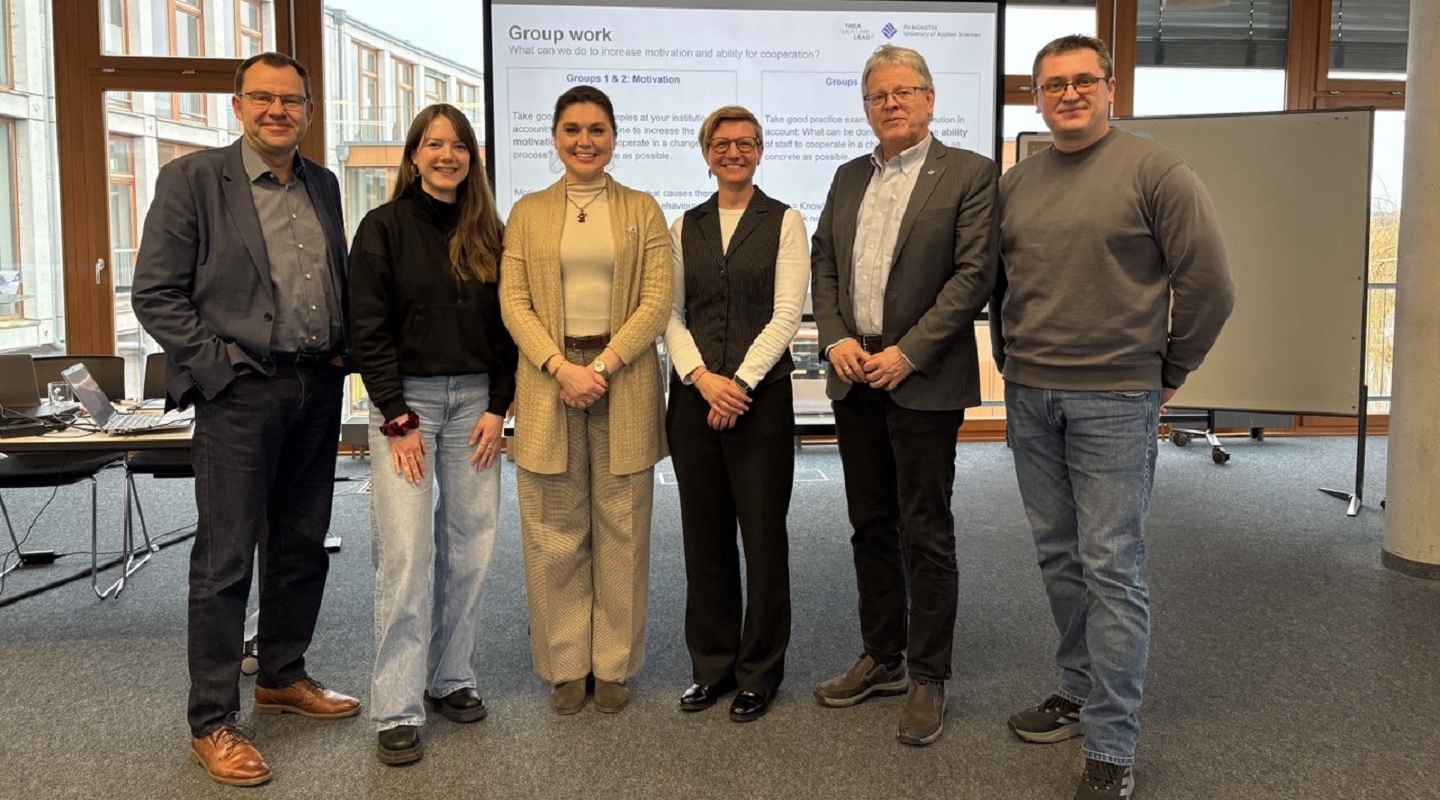
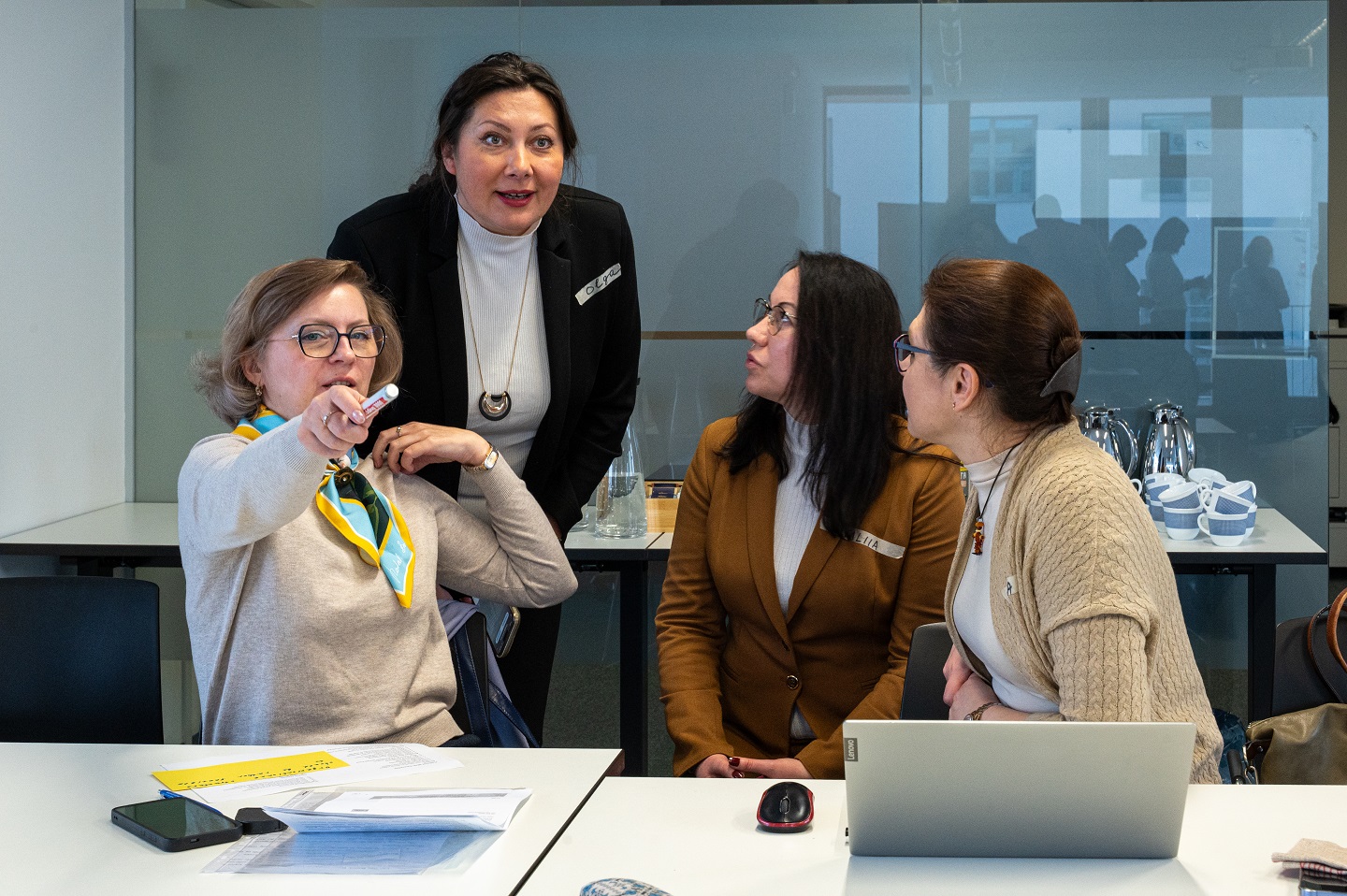
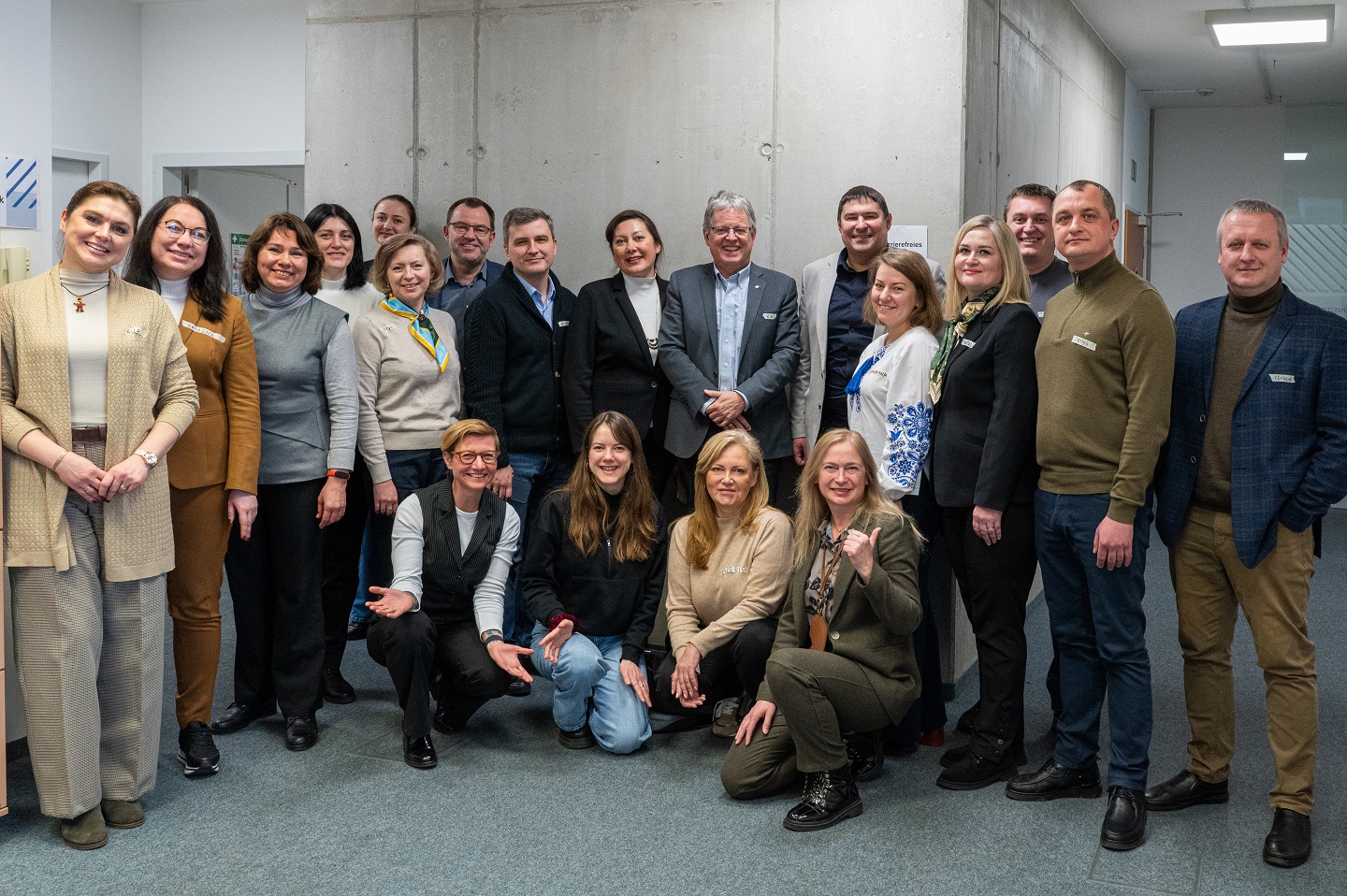
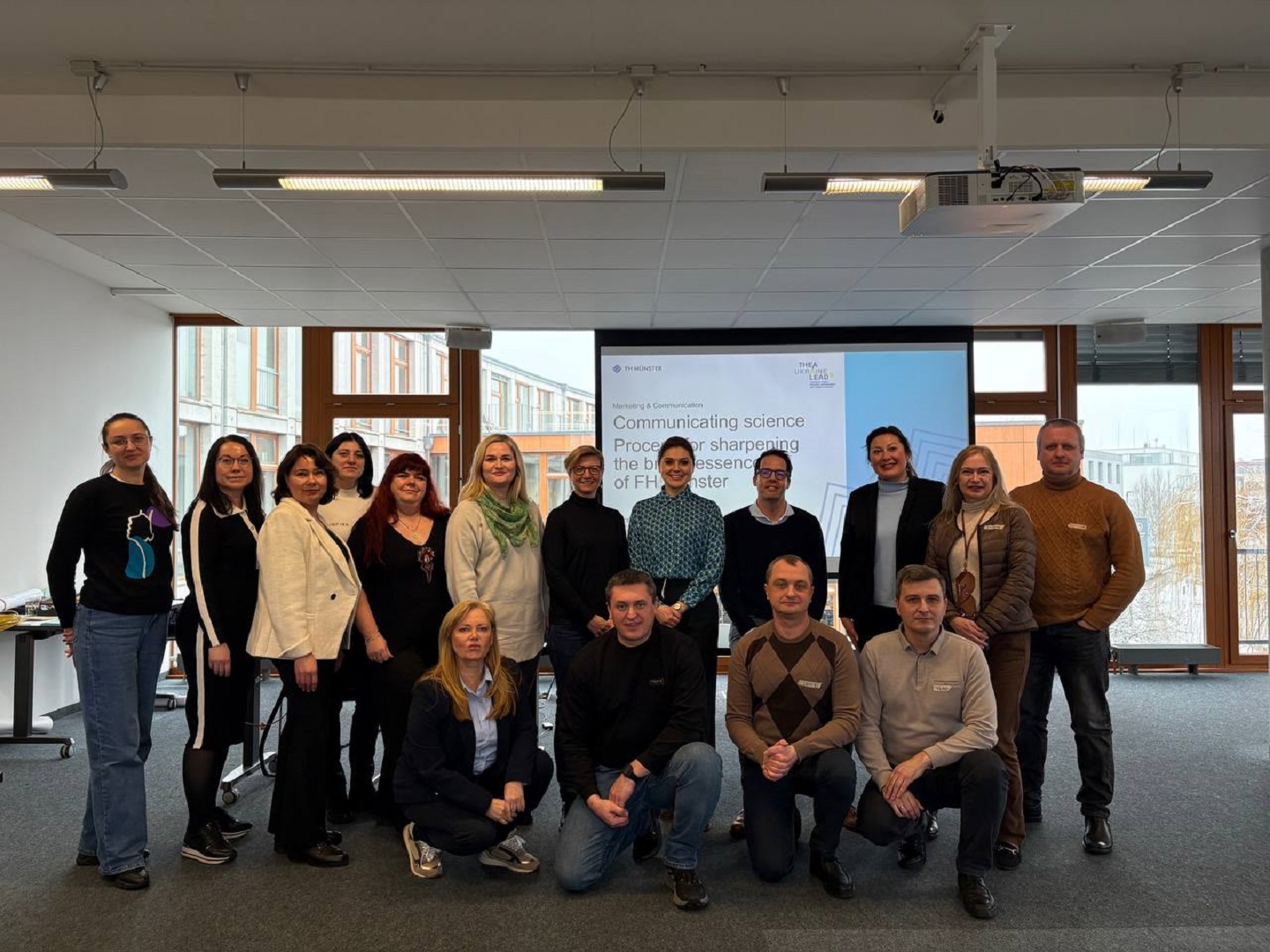
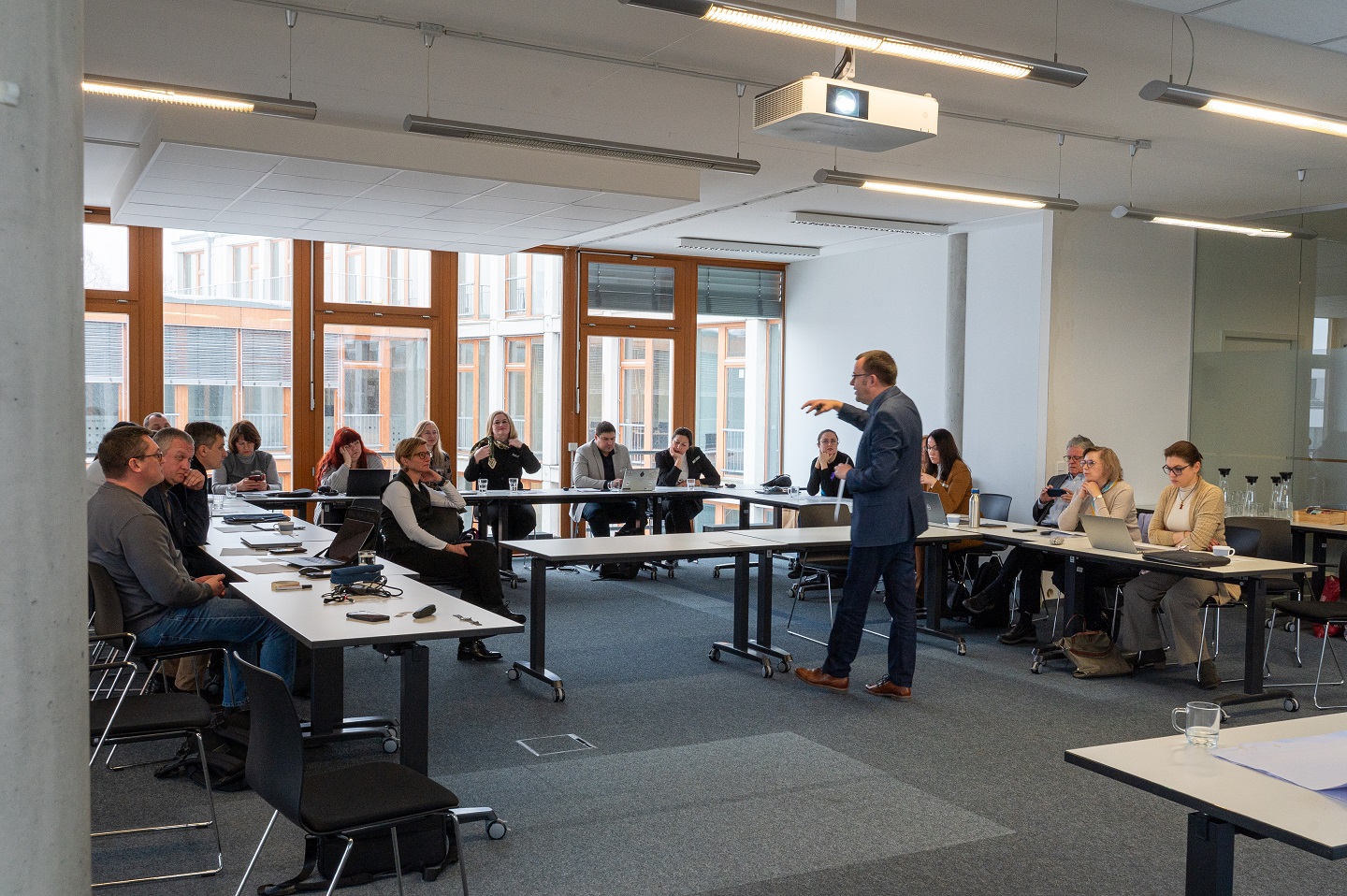
THEA Ukraine Lead once again brought together Ukrainian university leaders in Münster – this time for an in-depth conversation about teams, talent, conflict, and change management in times of war. The On-Site Workshop, held on 26–29 January 2026, became not only a training module but also a space for shared reflection and partnership.
Key outcomes of the workshop, work with change projects, and the role of international cooperation are discussed in an interview with the project coordinators: Dr. Alla Krasulia, PhD in Pedagogy, Head of the International Relations Office; Dr. Dmytro Tsyhaniuk, PhD in Economics, Director of the Department for Personnel Development and Training of Academic Staff; as well as programme participant Dr. Olga Stogova, PhD in Political Science, Deputy Director of the Educational and Research Institute of Law and Public Administration.
This conversation continues the theme introduced earlier in the article Shaping Leadership for Universities in Wartime: An Interview with Sumy State University Representatives, Coordinators of the THEA Ukraine Lead Project.
– THEA Ukraine Lead once again gathered Ukrainian higher education leaders in Münster. What did this visit mean for you?
Alla Krasulia: It was an intense and, at the same time, very warm phase of the project. The On-Site Workshop in Münster was not merely a training module within the continuing education programme THEA Ukraine Lead (Training for Higher Education Administrators and Leaders in Ukraine). It became a space for deep and honest reflection on what university leadership should look like in times of war and radical uncertainty. The discussion did not remain at the level of abstract concepts; instead, it unfolded through real management cases, personally experienced “pain points,” and decisions that are already being implemented in Ukrainian higher education institutions today.
Dmytro Tsyhaniuk: For me, this visit was primarily about people. About teams that keep universities running under conditions of exhaustion, constant change, and risk. In Münster, we worked extensively on team dynamics, roles, responsibility, and conflict. It was a very honest conversation – without embellishment.
–You were not only participants, but also coordinators and trainers representing Ukraine. Which topic-focused module did you lead?
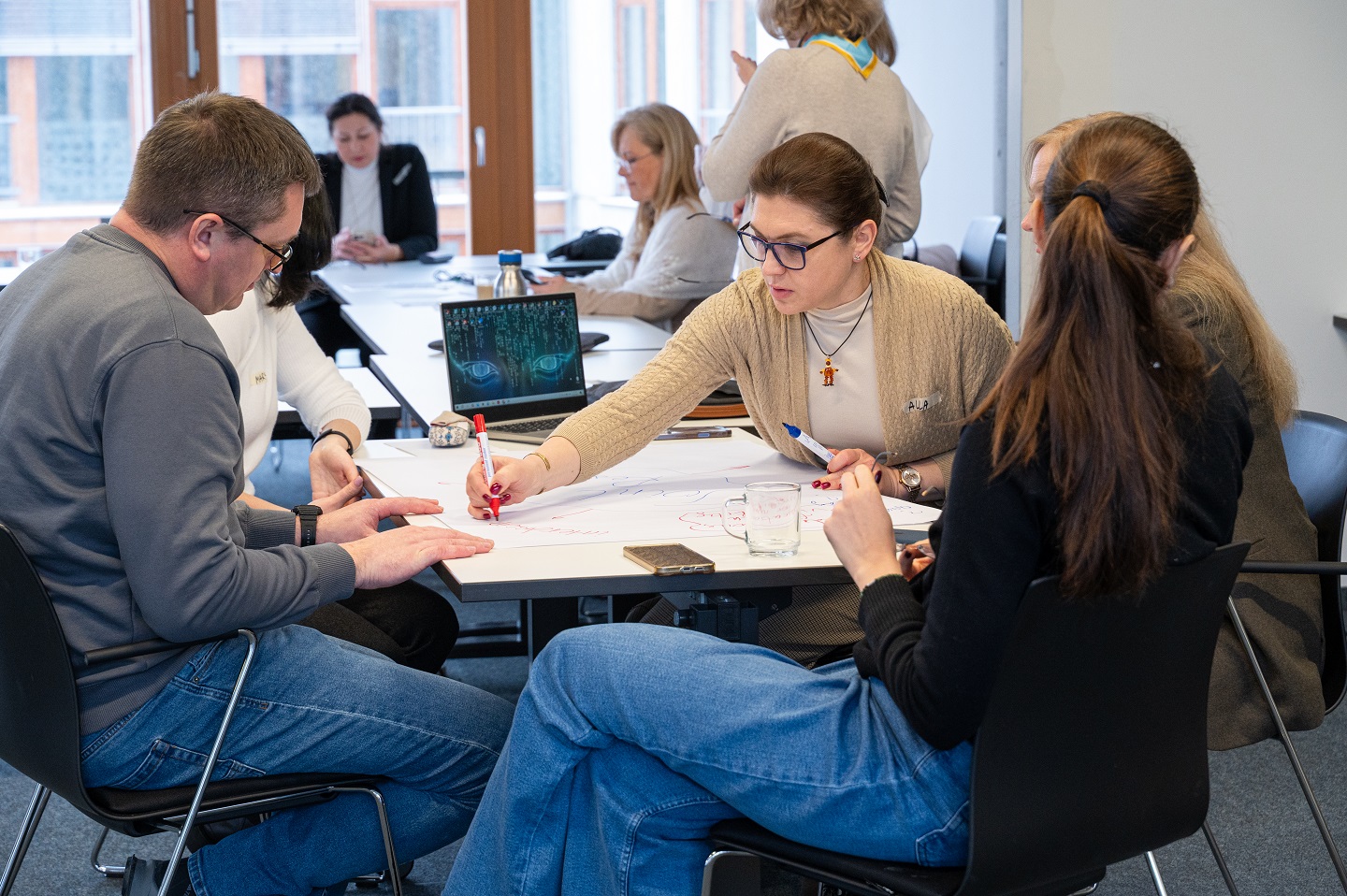
Dmytro Tsyhaniuk: Our joint thematic module with Alla Krasulia focused on Talent and Team Management as a Role of Leaders. We wanted to demonstrate that talent management is a leader’s daily responsibility. Who is overloaded, and whose potential remains underutilised? Where do we, as leaders, create risks through our decisions? Where do we find talented people, how do we develop them, and how do we retain them? These questions sparked very lively discussions.
Alla Krasulia: A particularly valuable experience was the joint facilitation of a conflict management session together with colleagues from Münster – Petra Pistor, Head of the Project at Wandelwerk, and Johanna Heinrich, Project Administrator at Wandelwerk (the Center for Quality Assurance and Enhancement). It was true teamwork between Ukrainian and German trainers, built on trust, openness, and mutual understanding of context. This is why the session became one of the deepest moments of the entire programme, where complex topics were addressed sincerely, and professional tools were combined with genuine human support.
– Ukrainian universities also participated through their own change projects. What can you say about this dimension?
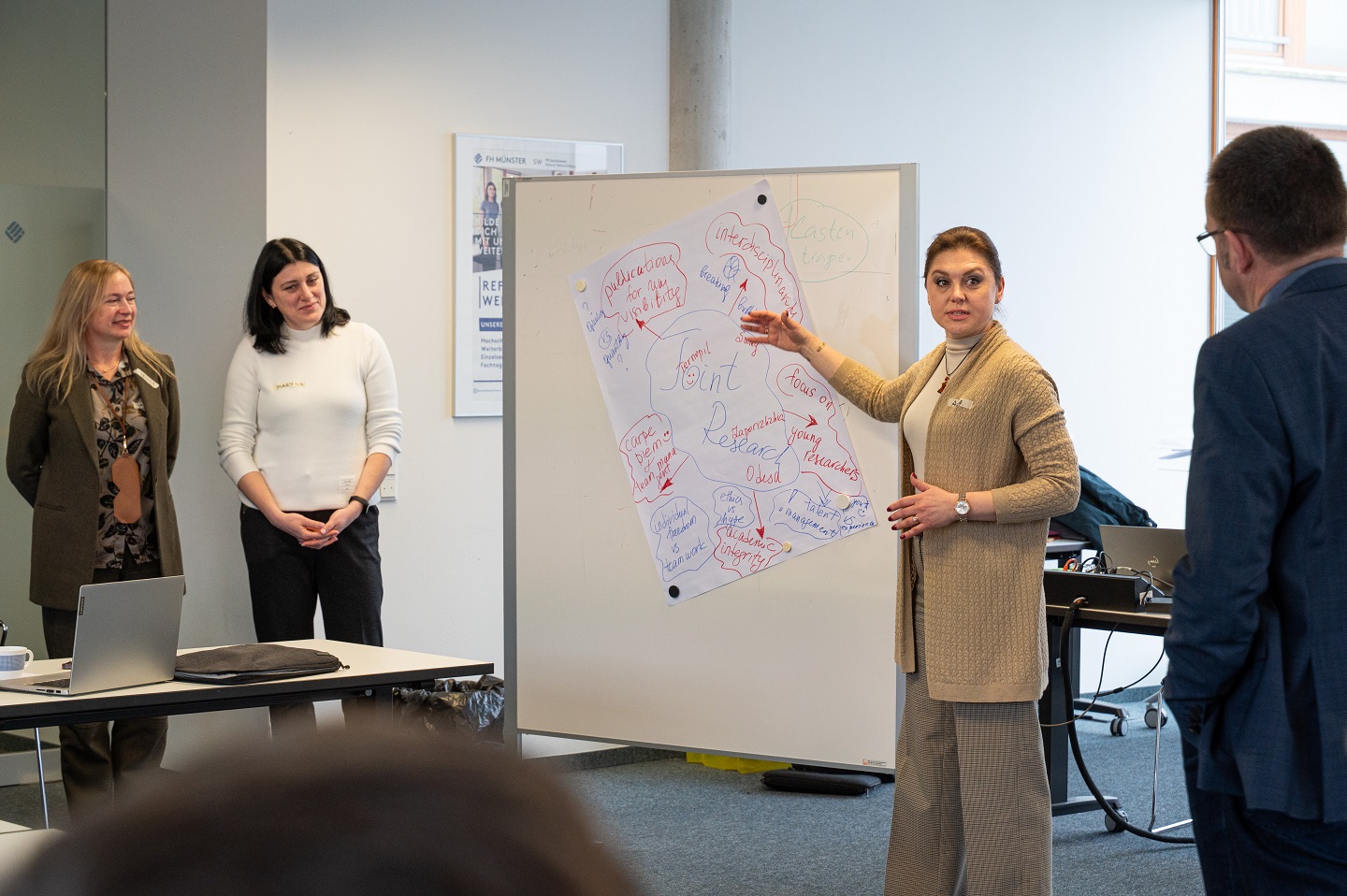
Alla Krasulia: This is the heart of THEA Ukraine Lead. Each participant arrived with a change project they are implementing at their home university. It is especially valuable that our colleague, Olga Stogova, was among the participants – her project, together with 15 others from Ukrainian higher education institutions, was selected for the programme. Project pitches, mentoring support, and continuous feedback help ensure that this is not “learning for the sake of learning,” but real progress towards meaningful change.
Olga Stogova: For me, this component of the programme was truly decisive. Working on my own change project in constant dialogue with mentors and colleagues helped me structure my ideas more clearly and look at them from a new perspective. Project pitches and feedback created a very hands-on atmosphere – informal, yet with a strong sense of responsibility for results. It is precisely in this format that you realise this is not training “for form’s sake,” but real change that you are ready and able to implement at your university.
– German colleagues played an important role in the programme. Who worked with the participants, and on which topics?
Dmytro Tsyhaniuk: The programme was exceptionally strong thanks to the German team. Petra Pistor and Johanna Heinrich from FH Münster accompanied participants throughout the workshop, using agile approaches and team tools while fostering the trustful atmosphere characteristic of the “THEA Ukraine family.”
Alla Krasulia: The sessions led by Dr. Kai Handel (Osnabrück University of Applied Sciences) and Prof. Dr. Frank Ziegele (Centre for Higher Education Development, CHE) were intellectually rich and highly substantive. They focused on building research culture, strategic university management, the role of rankings and key performance indicators (KPIs), and – most importantly – the risks of a “numbers race” at the expense of meaningful, value-driven development of higher education institutions.
Special recognition should also be given to Carsten Schröder, Vice President of FH Münster University of Applied Sciences, who worked with participants on science communication and university partnership strategies. His sessions offered a valuable opportunity to view university development processes from within the European higher education system and relate them to the challenges facing Ukrainian universities.
– The programme also included study visits. Why was this important?
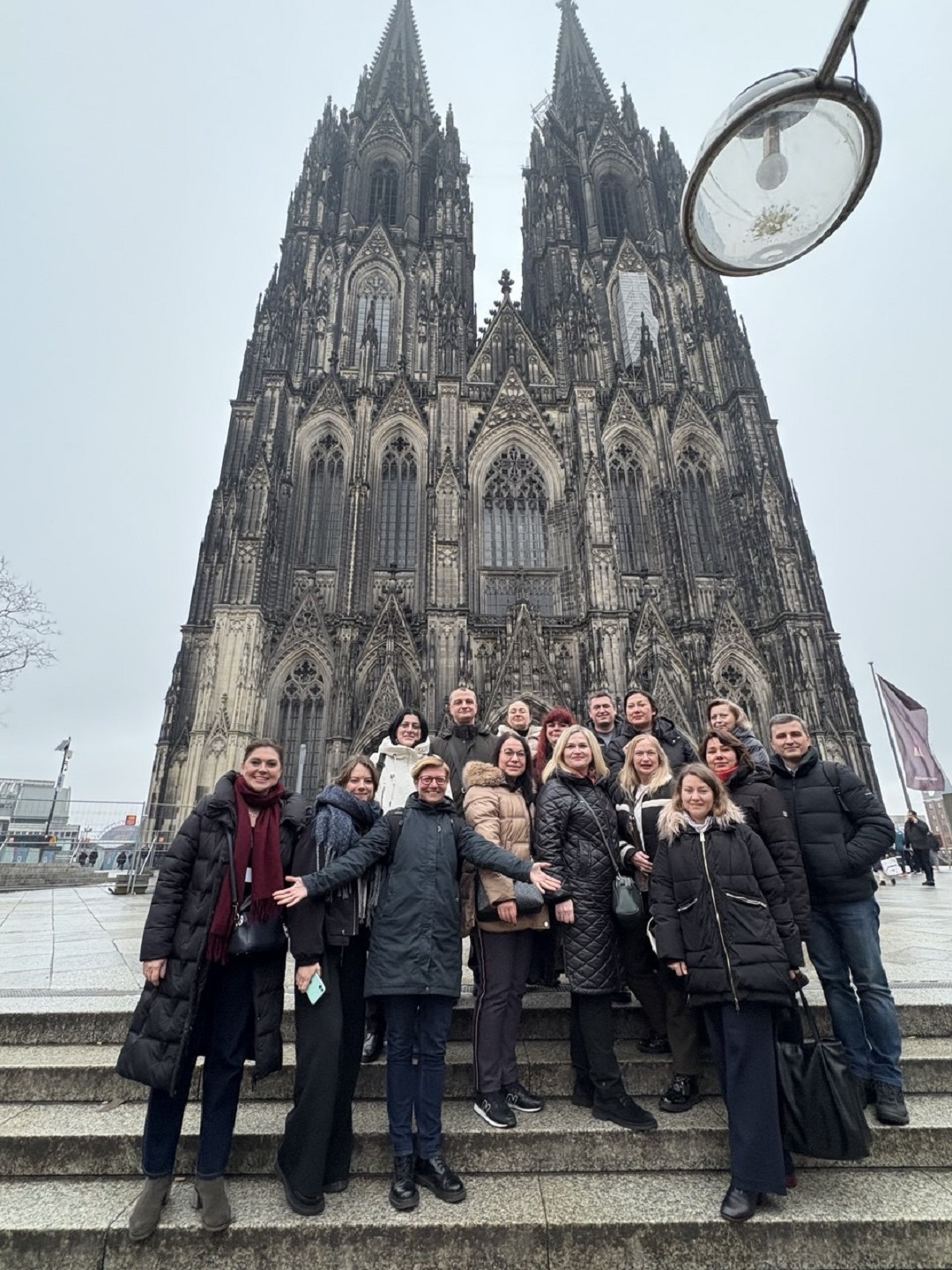
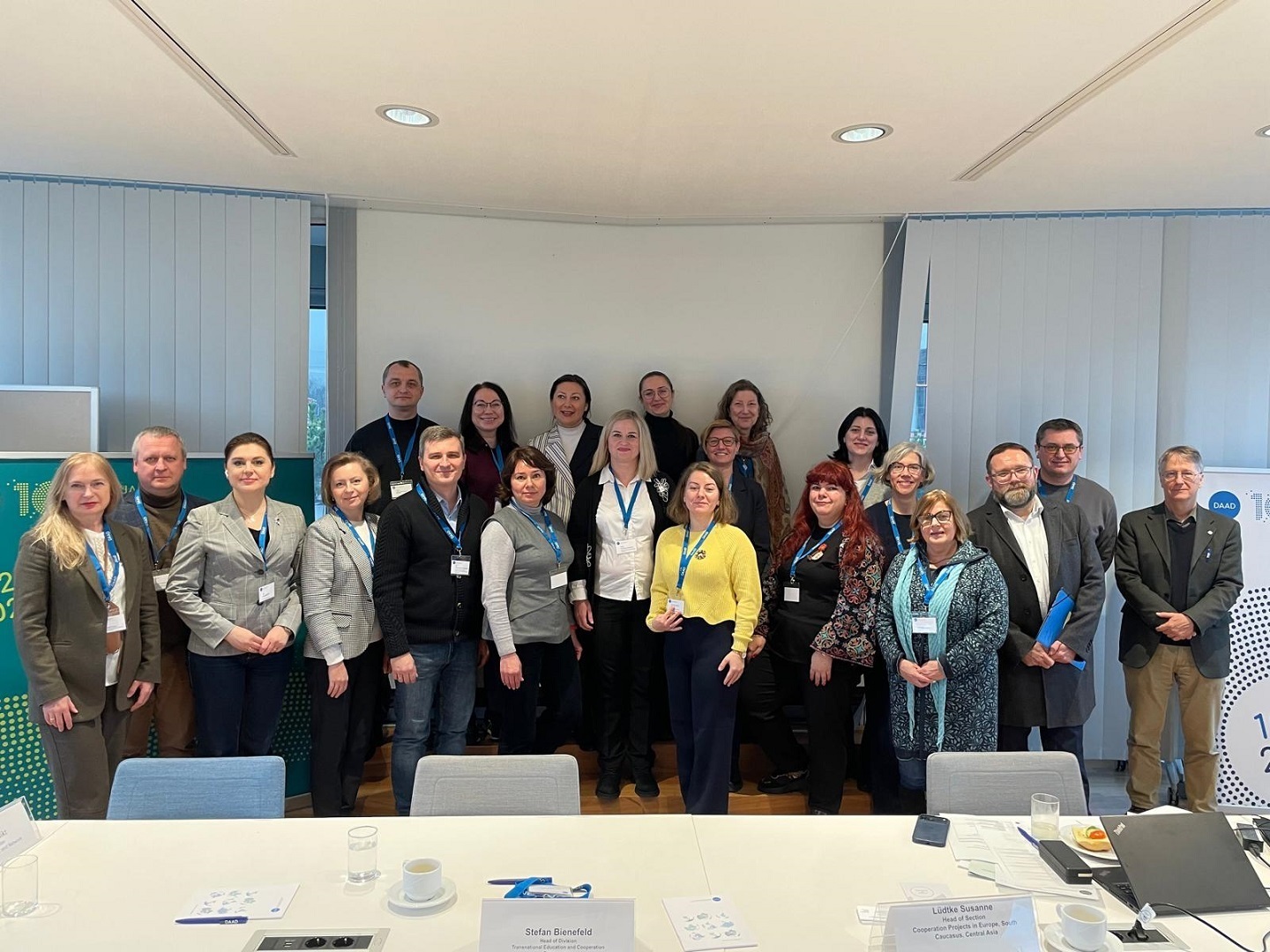
Alla Krasulia: Visits to the German Academic Exchange Service (DAAD) and the German Rectors’ Conference (HRK) in Bonn were an important and meaningful addition to the programme. During these meetings, participants were introduced to the activities and functioning of national academic associations and supra-institutional structures that shape higher education policy and strategic frameworks in Germany. For Ukrainian university leaders, this experience was valuable not only as inspiration but primarily as an opportunity to better understand how such institutions operate and to reflect on which elements of their approaches could be adapted to the Ukrainian higher education context.
To conclude: what is the main takeaway you brought back from Münster to Ukraine?
Olga Stogova: Returning from Münster, I gained a clearer understanding of the key challenges facing Ukrainian universities and possible ways to address them. The visit to the German Rectors’ Conference (HRK) helped me better understand the structure of the German university system and clearly demonstrated the crucial role of university autonomy in effective governance and the development of higher education.
Dmytro Tsyhaniuk: The realisation that university resilience begins with people and teams. Ukrainian universities are full of individuals who are committed to developing their alma mater in these difficult times. Sometimes they need support, sometimes an extra push, and sometimes simply the opportunity to meet colleagues from other universities and realise they are not alone. This is exactly what THEA Ukraine Lead aims to provide.
Alla Krasulia: And, without a doubt, a strong sense of international partnership. THEA Ukraine Lead is not about “top-down assistance,” but about shared thinking, equal dialogue, and shared responsibility for the future of Ukrainian higher education. Meetings with colleagues in Münster once again confirmed that we are not alone, and that Ukrainian universities have their own voice and a meaningful place within the European academic community. An important outcome of the project will be a scientific publication devoted to crisis management, resilience building, and post-war reconstruction of universities. This publication is being prepared with financial support from the German Federal Ministry of Research, Technology, and Space (BMFTR) via the German Academic Exchange Service (DAAD).
THEA Ukraine Lead: Training for Higher Education Administrators and Leaders in Ukraine continues to bring together Ukrainian and European partners around leadership development, resilience, and strategic change in higher education.
Interview by Halyna Levytska
(Photo: FH Münster / Michelle Liedtke)